Get Full Government Meeting Transcripts, Videos, & Alerts Forever!
Get email alerts on the Budget topic
No spam. Unsubscribe anytime.
SFPUC reports fiscal-year surplus, commissioners press for earlier public input on rates
Summary
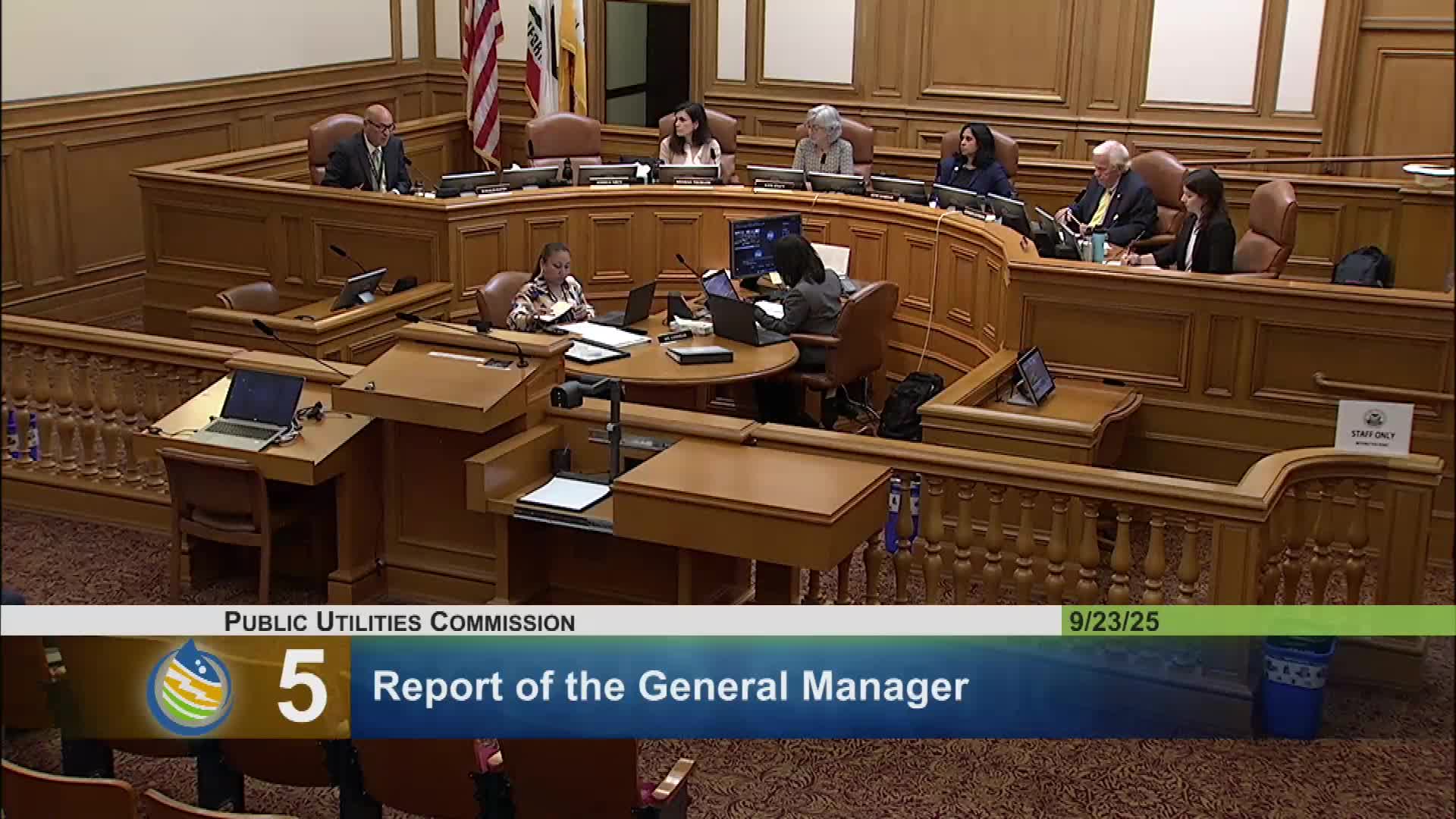
The San Francisco Public Utilities Commission on Sept. 24 reported preliminary year‑end operating surpluses across enterprises and outlined a two‑year budget process that staff said will include four January hearings and spring rate adoption, while commissioners pressed for earlier public engagement on rate tradeoffs.
The San Francisco Public Utilities Commission on Sept. 24 reported preliminary year‑end operating surpluses across its enterprises and laid out a budget development timetable that will culminate in January budget hearings and a Board of Supervisors review later in the year.
Anna Dooning, budget director at the SFPUC, told commissioners the commission is projecting positive operating results across water, wastewater, power and the CleanPowerSF program for the fiscal year that ended June 30. "In water, we're projecting around $18,000,000 in surplus funding at year end," Dooning said, and she cited stronger‑than‑expected revenues, higher interest earnings and some operational savings as reasons for the results.
Why it matters: Commissioners said the numbers will inform rate and capital choices that affect San Francisco households. Several commissioners and members of the public pushed staff to present budget tradeoffs and community outreach earlier than the scheduled January budget hearings so elected officials and residents can influence decisions before they are finalized.
Dooning described the next steps and timeline: the SFPUC issued budget instructions in July, is updating a 10‑year capital plan, and plans four special budget hearings in January. Laura Bush, deputy chief financial officer, said rate adoption is linked to the budget process and typically occurs in the spring. "The rates adoption process ... will occur in the spring, probably around April or May," Bush said.
Commissioners pressed staff for earlier engagement and clearer information on tradeoffs. Vice President Arce said he wanted to be involved "as early in the process as ... feasibly, appropriately possible" so ratepayer concerns can be considered before the budget is effectively finalized. "I don't want to be ... coming to the January meetings and then just learning at that point what the analysis and deliberation was during the months of October and December," Arce said.
President Stacy and other commissioners asked staff to provide preliminary materials and additional informational sessions well before January. Commissioner Thurlow suggested the October–December analysis phase should include public commission hearings or other public forums so the commission can weigh tradeoffs with time to digest the information.
Public commenters also urged earlier engagement and changes to assumptions that can reduce costs. Maurice Grama, a San Francisco resident, urged the commission to scrutinize demand projections and the SFPUC's "design drought" assumptions to limit costly investments that drive rate increases. Peter Dreckmeier, policy director at the Tuolumne River Trust, asked for a workshop for commissioners on the Tuolumne River voluntary agreement and for staff to consider realistic demand assumptions when planning alternative water supplies.
Staff cautioned that some of the recent positive results are one‑time or market‑driven and not necessarily recurring. Dooning said interest earnings and single one‑time payments contributed to the surplus and that power revenue swings reflect market volatility. She said the agency is managing fund balances inside each enterprise to smooth future rate changes.
On outreach timing, Bush said the SFPUC conducts extensive public engagement tied to rate adoption — town halls, community meetings, webinars and the rate fairness board — and said staff welcomes input on how to expand or accelerate that outreach. She estimated community engagement sessions will likely occur around February–April but welcomed commissioner help in starting outreach earlier.
Ending: Commissioners asked that staff return with more briefings and earlier opportunities for public input on budget and rate tradeoffs so the commission and ratepayers can weigh options ahead of the January hearings and the formal spring rate adoption process.