Get Full Government Meeting Transcripts, Videos, & Alerts Forever!
Get email alerts on the Municipal Revenue topic
No spam. Unsubscribe anytime.
Toledo tax office reports August revenue gains, plans to join Ohio attorney general offset program
Summary
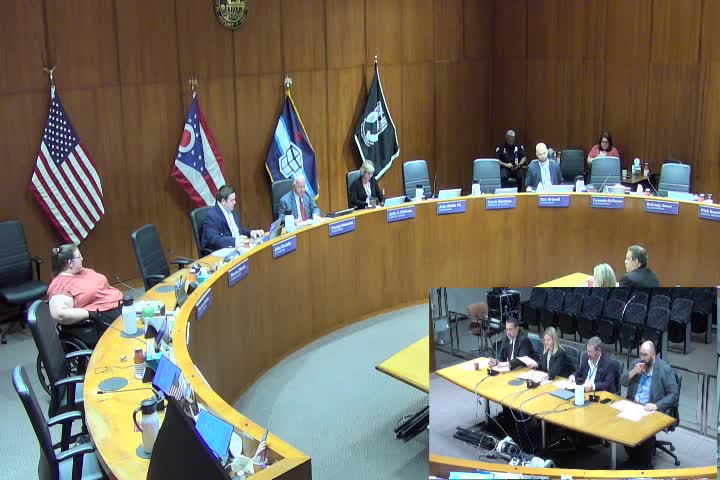
At a meeting of the Finance, Debt and Budget Oversight Committee, city tax officials said August income-tax receipts showed unusual timing effects from a few large employers and outlined plans to participate in the Ohio attorney general's refund-offset program in the fourth quarter to improve collections without direct cost to the city.
The Finance, Debt and Budget Oversight Committee heard an August income-tax report from the city's taxation commissioner, who said withholding and business payments rose in the month largely because a handful of large employers shifted payments into August.
Commissioner of Taxation John Zavisha told the committee that withholding for August was up about $1,900,000 (13.6 percent), but that roughly $1,000,000 of that increase came from three companies in the city's top-15 that made September payments in August to avoid the Labor Day holiday. He said one company accounted for just under 42 percent of business-category receipts for the month, which can cause large month-to-month swings.
Why it matters: Income-tax receipts fund core city services. Timing shifts by a few large employers can change monthly results but do not necessarily indicate a sustained trend. The administration said it will evaluate August and September together to determine whether July's growth continued into later months.
Zavisha also briefed the committee on Toledo's planned participation in the Ohio attorney general's refund-offset program, which department staff expect to begin in the fourth quarter. The program allows the state to apply federal or state refunds, lottery winnings or other offsets to unpaid municipal tax liabilities after the city has sent required notices and waited the program's minimum period.
"There's no cost to the city for this," Zavisha said, explaining that the state collects a 10 percent fee on amounts it enforces but remits the city's owed tax in full. "So this is a win-win for us on this one," he added, saying the program will free staff time for audits and investigations rather than collections activity.
Zavisha described the operational steps: the city must issue four notices to a taxpayer and wait at least 60 days after the final notice before submitting a case to the attorney general. Once submitted, state staff perform skip-tracing, calls and letters; the state's tools can include liens, garnishments and offsets of federal or state refunds.
Other revenue details presented to the committee included: - Refunds issued through August totaled about $3,100,000; the city had set aside $6,000,000 for refunds. Zavisha said last year's full-year refunds were roughly $5.7 million to $5.8 million (final audited 2024 totals were not available at the meeting). - Adjustments tied to the IRS unit and the transition to the Ohio attorney general process have reduced assessments in recent months, though year-to-date collections remain positive.
The chairman and council members asked staff to track whether the August spike carries into September and to report back once the city has begun exchanging data with the attorney general's office.
Ending: Finance staff said they will compare August and September results before drawing conclusions about sustained growth and expected to execute a memorandum of understanding with the state before the program goes live in the fourth quarter.