Get Full Government Meeting Transcripts, Videos, & Alerts Forever!
Get email alerts on the Property Tax Rate topic
No spam. Unsubscribe anytime.
Richmond council debates proposed property tax cut; administration warns of $17.3 million shortfall
Summary
Mayor Bullard and city officials discussed a proposed reduction to Richmond's real estate tax rate during an informal City Council session, with the administration warning the cut would reduce revenue by roughly $17.3 million and urging caution before altering the budget the council already adopted.
Mayor Bullard and city officials discussed a proposed reduction to Richmond's real estate tax rate during an informal City Council session, with the administration warning the cut would reduce revenue by roughly $17.3 million and urging caution before altering the budget the council already adopted.
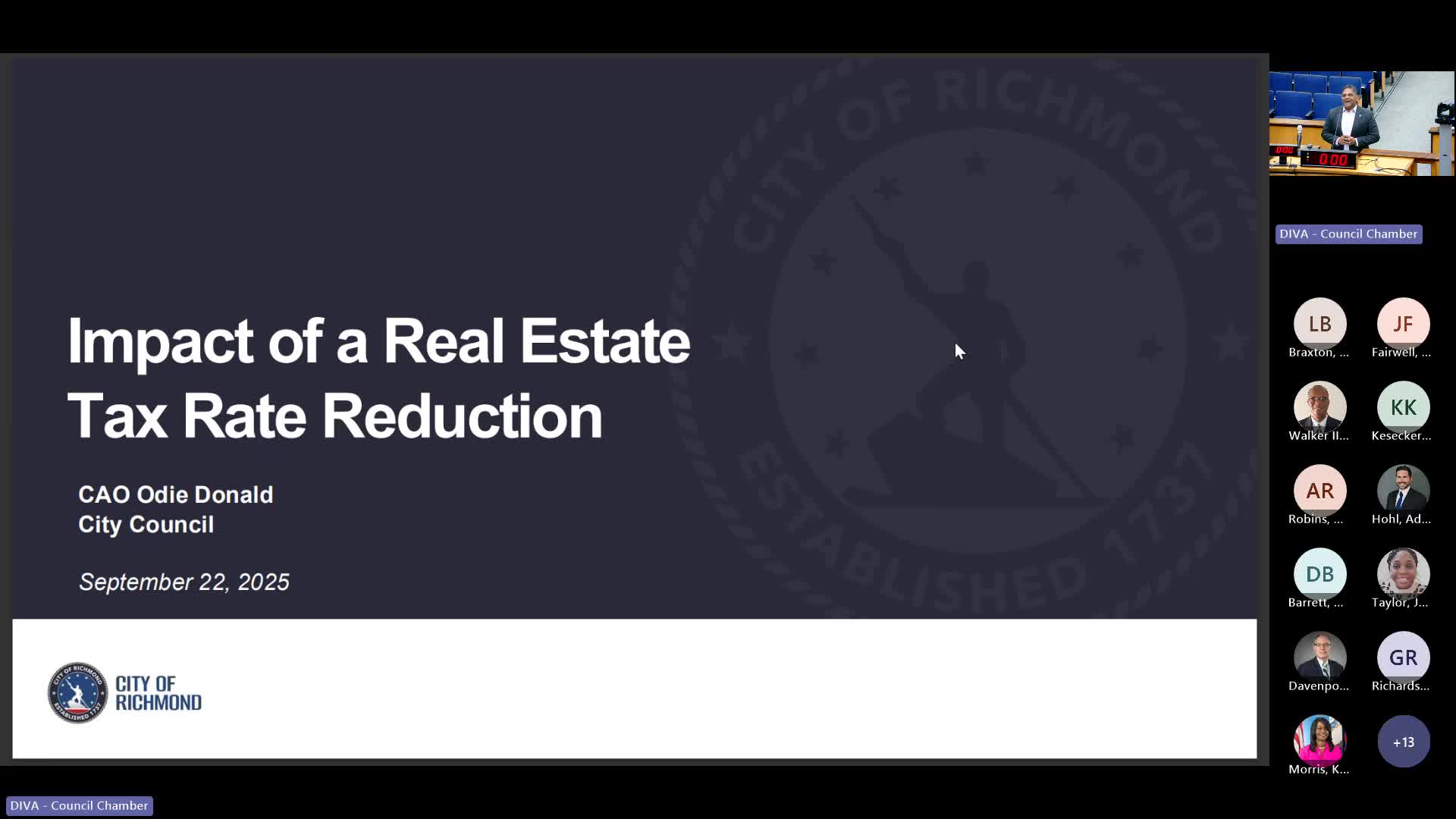
The city's chief administrative officer, Odie Donald, told council members: "For every penny, we'll call it about $4,300,000 in revenue," and said a four-cent cut would reduce the city's revenue by about $17,300,000 and would also remove roughly $50,000,000 in capital project support from the budget. Donald said the shortfall could mean "potentially 150 or so staff across the entire operation," a "13% reduction in our operating budget," or significant cuts to school funding.
The presentation followed a proposal to lower the real estate tax rate by four cents that was co-patroned by President Newbill, which the mayor said he supported conceptually but believed "this is not the time for that decision." Council members questioned timing, equity and the magnitude of the benefits to residents.
Why it matters
The council just adopted a budget that the administration says is based on a $1.20 real estate tax rate and on projected assessments; changing the rate now would require the city to alter that plan midyear. Donald told the council the city faces other growing costs, including collective-bargaining increases (he cited an additional $27 million this year, rising to an estimated $55 million the next year and to roughly $84.8 million after three years), rising retirement liabilities and large capital needs such as a projected $300 million John Marshall Court building and bridge replacements he estimated at more than $100 million.
What the administration presented
Donald summarized the budget trade-offs and warned that the proposed tax reduction would disproportionately benefit homeowners while leaving renters (about 56% of city residents, per the presentation) unaffected. Using the administration's figures, Donald said a homeowner of a $200,000 house would see about $80 in annual savings (about $6.67 per month, or roughly $0.22 per day) under the proposed reduction.
Donald also emphasized the assessment freeze planned for the next budget cycle as a reason to avoid a tax-rate cut now. "Doing so now is a little bit dangerous," he said, arguing the freeze will align assessment timing and budget development in future years.
Council questions and concerns
Councilwoman Gibson sought clarity about how the budget used assessment projections, saying she wanted "clarity on the amount the assessment is based on" and asking for the math comparing projected assessments used in the budget to the actual assessment values received so far.
Other council members pressed the administration for more information about where cuts would fall and how resident relief could be targeted. Councilmember Trammell and others argued for more public outreach and a fuller debate before changing the rate, saying residents should be presented with the trade-offs between modest tax savings and potential service reductions. Several council members, including Councilmember Lynch, compared Richmond's tax rate and services with surrounding counties and suggested the city must demonstrate why its rate differs and which services residents would lose.
Legal timing and next steps
The City Attorney told the council that state law requires notice 45 days before the effective date (January 1) and that the council must adopt any new rate prior to the deadline (the attorney identified a likely Nov. 10 meeting as the last opportunity). The attorney stated the rollback rate would go into effect on Jan. 1 if the council does not adopt another rate and identified the rollback rate in discussion as approximately $1.14.
No formal change in the tax rate occurred during the informal session. Council members requested additional written analysis comparing assessed-value projections to actual collections, the status of reserve balances and how recently passed audit findings or policy changes affect the budget.
Other action
Council members reached consensus to move Resolution 20 25 R035 from the regular agenda to the consent agenda after staff indicated the entity named in the resolution had complied with CAR recommendations. That administrative change was recorded by the clerk; no roll-call vote was recorded in the transcript.
What's next
Council members and the administration said the proposal will return for formal deliberation when the paper is posted on the regular agenda. The CAO and finance staff agreed to provide the additional assessment and revenue analysis requested by council members for use in upcoming deliberations.