Get Full Government Meeting Transcripts, Videos, & Alerts Forever!
Get email alerts on the Parking Policy topic
No spam. Unsubscribe anytime.
Tamarac adopts citywide on-street parking ordinance with time-limited decal exception, vote 4-1
Summary
The commission adopted an ordinance creating a citywide process for managing on-street parking restrictions and a temporary decal program limited to 14 days per calendar month per household; Mayor Michelle J. Gomez voted no.
The Tamarac City Commission adopted a new ordinance Sept. 24 creating a citywide mechanism to manage on-street parking restrictions and enforcement, including a temporary decal program to allow limited visitor parking in otherwise restricted neighborhoods. The final vote was 4-1, with Mayor Michelle J. Gomez casting the lone no vote.
Deputy City Manager Maxine Calloway presented changes made since the first reading, including a list of neighborhoods proposed for enforcement, and a revision that allows the commission, by majority vote, to add or remove neighborhoods from the list. Calloway said staff added language to allow the city manager or designee to manage signage, an application process and fee schedule for decal issuance so the program can offset administrative costs.
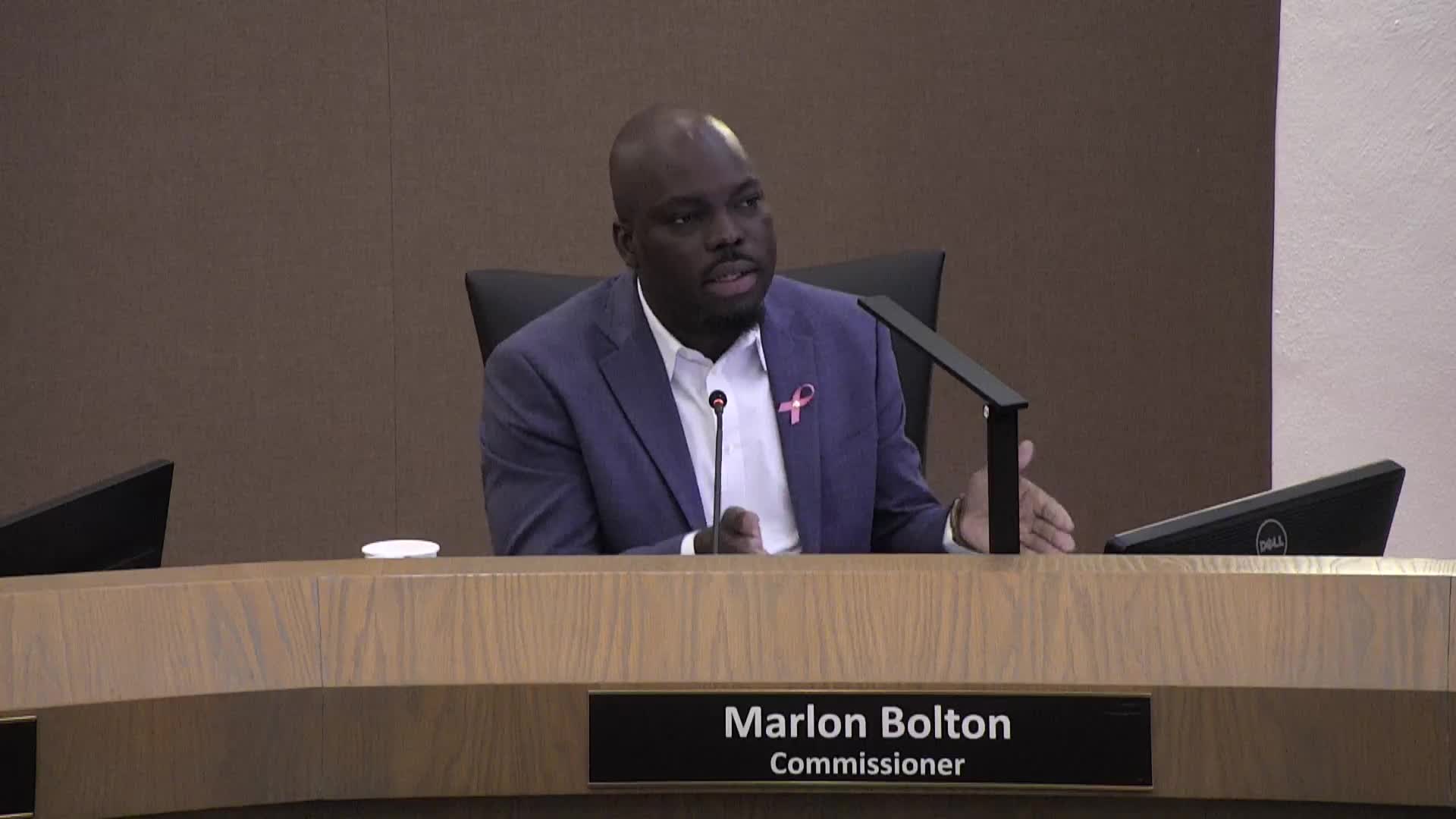
Commission debate focused on the decal program’s duration, transferability and how to protect neighborhoods that specifically prohibit on-street parking. Commissioner Crystal Patterson, who requested the program change, pressed for a short-term decal limit to avoid creating permanent on-street parking rights in neighborhoods that sought restrictions. After back-and-forth about enforcement mechanics, Commissioner Patterson offered a friendly amendment limiting decals to 14 days within a 30-day period and to one decal per household when space is available; the commission accepted that amendment.
Commissioner Debra Bolton and others asked for additional clarifications — including whether associations and existing city-enforced agreements would be grandfathered — and staff said existing agreements the city approved in prior years would be honored. Several commissioners emphasized that the decal process is intended to be discretionary, subject to safety reviews (for example, ensuring emergency vehicles would not be blocked), and administered so signage and application fees support enforcement.
Maxine Calloway said the policy also includes a 6-month public-education period before enforcement begins. The commission approved the ordinance as amended; Mayor Gomez dissented, saying she had concerns about political influence and the breadth of exceptions.
The ordinance and attached parking policy will be implemented through city code enforcement and the manager’s office; staff said they would return to confirm details and clarify language around short-term versus long-term decals and how homeowner associations' rules interact with city enforcement.