Get Full Government Meeting Transcripts, Videos, & Alerts Forever!
Get email alerts on the Human Relations Council topic
No spam. Unsubscribe anytime.
Council approves changes to Human Relations Council structure, removes 'advisory' label in 5-2 vote
Summary
The Valparaiso Common Council approved Ordinance 8-20-25 to change appointment authority for the Human Relations Council and remove the word “advisory” from its title; the measure passed 5-2 after extended debate over separation of powers and the council’s role.
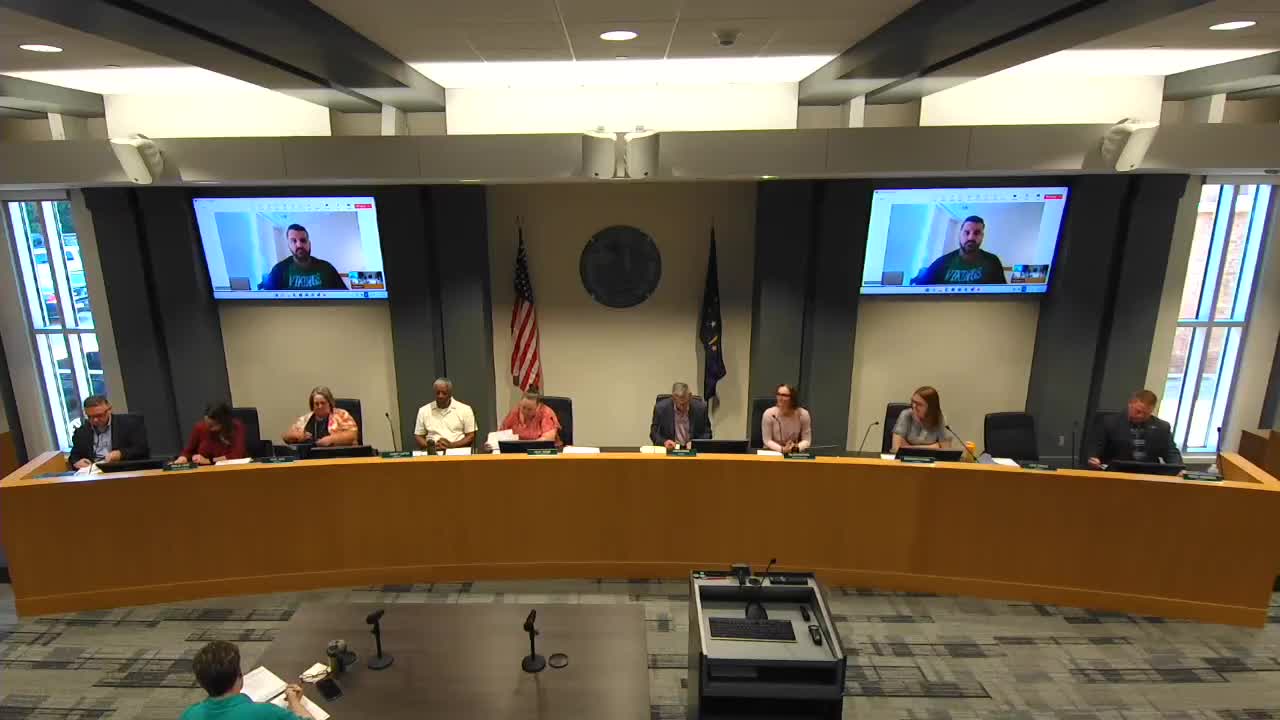
The Valparaiso Common Council on July 28 approved Ordinance 8-20-25, changing how members of the city’s Human Relations Council (HRC) are appointed and removing the word “advisory” from the body’s title. The ordinance passed on second reading and final vote, 5-2.
Supporters said the measure rebalances appointments between the council and the mayor to increase representation. “The revised ordinance introduces a more balanced structure with appointments made by both the city council and the mayor...6 by the council, 3 by the mayor,” Councilwoman Hunt said during the council’s second reading, adding the change makes the HRC “public facing” rather than strictly advisory.
Opponents, including Mayor Costas, said the change blurs the constitutional and practical differences between the executive and legislative branches of city government and could create coordination problems for day-to-day service delivery. “The mayor’s office is in charge of the delivery of all city services overseeing 400 employees, and essentially the daily operations,” Mayor Costas said, arguing the mayor’s advisory committee has been an effective touchpoint for operational issues.
The ordinance removes the word “advisory” from the HRC’s name and sets appointment authority so the council names six members and the mayor names three. Proponents said the split is intended to ensure the council and mayor receive similar information and to broaden perspectives on the panel. Opponents said tasks the council may assign the HRC could require formal council votes and questioned how that change would work in practice.
Council discussion included repeated assurances from supporters that the HRC’s charge, mission and values would not be altered by the reorganization. One council member said, “This ordinance isn’t a power grab. It’s a commitment to democracy,” during debate; others warned that if the mayor declined to make appointments, council provisions in the ordinance would permit the council to fill those seats.
The roll call on the ordinance was recorded as: Patton — yes; Domer — yes; Papillo — no; Anderson — no; Capitan — yes; Hunt — yes; Reed — yes. The ordinance passed 5-2.
The council did not announce immediate changes to funding for HRC activities; one council member noted some programs historically received modest mayoral funding (roughly $10,000–$22,000 in recent years), but no new budget appropriation was proposed at the meeting.
Next steps: Ordinance 8-20-25 is adopted and will be incorporated into the municipal code; implementation details (appointment scheduling and any administrative rules) will follow through regular city procedures.