Get Full Government Meeting Transcripts, Videos, & Alerts Forever!
Get email alerts on the Public Safety Operations topic
No spam. Unsubscribe anytime.
Elkhart fire chief wins board approval for overhead door directive after citing safety and repair costs
Summary
The Board of Public Safety approved a directive for fire station overhead doors after the fire chief described repeated damage and costs from doors left partially open; the policy ties discipline to damage reports and not solely to noncompliance.
The Elkhart City Board of Public Safety on Sept. 9 approved a directive requiring proper use of fire station overhead doors and authorized the chief to sign the directive on the board's behalf.
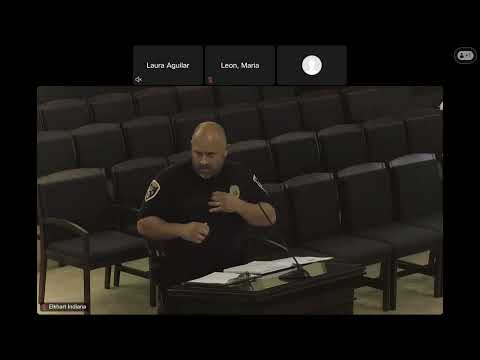
The fire chief said the directive is aimed at ending a long-standing practice of leaving bay doors partially open, which has led to repeated mechanical damage over the chief's 30 years in the department. "These doors being up or down has cost the department in my 30 years thousands and thousands of dollars," the chief said.
Board members asked whether simply not following the directive would trigger discipline. The chief replied discipline would be applied when damage occurs or when there is a report or direct observation of improper use; a first response to an observed violation would be a verbal warning. "If one of the fire engines hits it or if something's wrong with the door and we find out that it was left halfway up, then that would kick in the discipline," the chief said.
The chief also said not all stations have interior cameras; Station 6 (a new build) and Station 5 currently lack cameras. The board accepted the directive and approved the chief's authority to sign it on the board's behalf.
The board's action was presented as an operational directive rather than new local law or ordinance. The directive's enforcement mechanism relies on reported incidents or observable damage rather than automatic surveillance-based enforcement.