Get Full Government Meeting Transcripts, Videos, & Alerts Forever!
Get email alerts on the Procurement Local Manufacturing topic
No spam. Unsubscribe anytime.
Committee deadlocks on bill pushing use of locally manufactured construction materials
Summary
Lawmakers and agency witnesses debated a proposal to require locally manufactured construction materials on government‑funded projects; concerns about federal grant rules, availability and cost led the committee to vote the measure down.
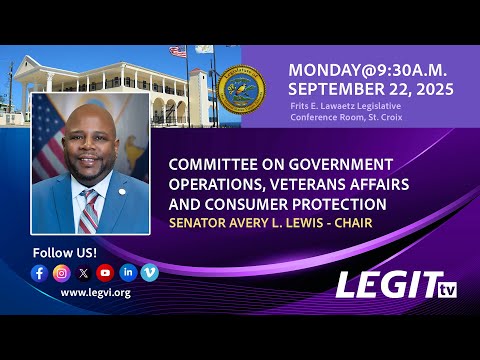
The Committee on Government Operations held a lengthy hearing on Bill No. 36‑0102 on Sept. 22, 2025 — a measure that would reenact section 23‑6(b) of the Virgin Islands code to require use of construction materials “manufactured in the Virgin Islands to the greatest extent practicable” for locally‑ or federally‑funded government contracts.
Why it mattered: Sponsors said the policy would retain public dollars in the territory, spur manufacturing jobs and strengthen supply‑chain resilience after the storms of recent years. Opponents warned it risks violating federal domestic‑preference rules attached to grants and could raise costs or cause delays on federally funded infrastructure projects.
What witnesses said: Department of Property and Procurement Commissioner Lisa Alejandro urged careful drafting and asked for an explicit exemption where federal grant terms conflict with the proposal, noting a variety of federal domestic‑preference statutes (Buy America, Buy American) that apply to different grants. Department of Public Works Commissioner Derek Gabriel and the Virgin Islands Housing Finance Authority both supported the concept’s intent but described practical concerns about limited local manufacturing capacity and federal grant compliance. The Bureau of Economic Research offered an economic case for retaining local spend and reducing import leakage. Local manufacturers and component producers, including Cat 5 Builders, said the bill would help grow local production and jobs.
Committee outcome: After amendments were discussed on the record, the committee held a roll call. The vote was tied (3 ayes, 3 nays, 1 absent) and the measure failed to pass out of the committee the same day. Committee members said they plan to continue interagency discussions and the sponsor signaled willingness to refine the bill language.
Key technical issues raised: witnesses and committee members asked for: (1) an explicit carve‑out for federally funded projects or a mechanism to verify grant terms before applying the preference; (2) a definition distinguishing raw materials from finished, locally‑manufactured construction products; (3) a transparent exemption process to be applied during bidding and construction if local supply is insufficient or of unsatisfactory quality; and (4) guardrails to prevent double application of price variances (preferred bidder statute already allows a 15% local preference).
Next steps: The sponsor indicated legal counsel had drafted amendments incorporating many agency suggestions; officials requested more time to coordinate with federal funding agencies to avoid jeopardizing reimbursements. The bill will remain in committee for rework rather than proceed to Rules.