Get Full Government Meeting Transcripts, Videos, & Alerts Forever!
Get email alerts on the Hate Crimes Ordinance topic
No spam. Unsubscribe anytime.
Spartanburg council advances hate-intimidation ordinance after hours of public comment
Summary
After more than two hours of public comment both for and against, the Spartanburg City Council approved on first reading an ordinance creating a separate municipal offense of "hate intimidation" to be charged in addition to underlying crimes if motive is proven.
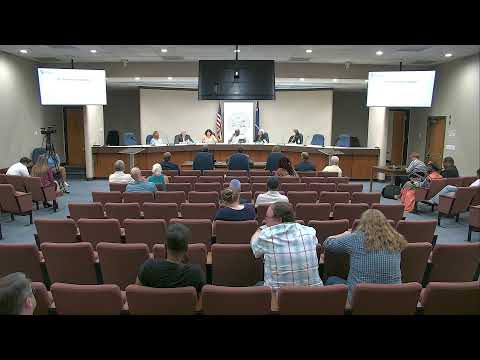
Spartanburg City Council on Sept. 22 approved on first reading an ordinance to add a separate offense of “hate intimidation” to the city code, after more than two hours of public comment that included proponents who said the measure would protect vulnerable residents and opponents who warned it could chill free speech.
City Attorney Robert Colas read the proposed ordinance aloud for council and the public, saying in part: “A person who commits a crime ... with the intent to harm, injure, or damage the personal property of the victim or to cause the victim to fear harm ... because of the actual or perceived race, color, creed, national origin, religion, ancestry, sexual orientation, gender, gender identity, or physical or mental disability is guilty of a separate offense of hate intimidation.”
Supporters stressed the ordinance would send a message of inclusion and give police and prosecutors an additional tool when motive can be shown. “Passing this ordinance is not about politics,” said Amaria (lead community advocate for Siren). “It’s about people, all people. … This is about dignity. It’s about safety.” Several speakers cited other South Carolina municipalities that have adopted similar local measures.
Opponents focused on constitutional concerns, enforcement and potential misuse. Representative Sarita Edgerton told the council she opposed the ordinance, saying it “violates the First Amendment” and raised concerns about double jeopardy and equal-protection implications. Other opponents raised hypotheticals about vague definitions and potential infringement on religious expression.
Colas told council the ordinance is written to apply only when an underlying criminal offense has occurred and that free-speech protections remain intact. “This is not an attack on or an infringement upon free speech,” he said, noting defendants retain jury trial rights and that courts routinely resolve questions of intent.
Council members asked about penalties, enforcement burden and experience in other cities. Colas and others said municipal court limits the city’s penalty to the municipal cap (up to 30 days or a $500 fine) and that the substantive decision about intent would rest with prosecutors and ultimately juries. Several speakers urged the council to balance symbolic value and practical effect; several community organizations framed the measure as both moral statement and public-safety tool.
On the council floor a motion was made and seconded to adopt the ordinance on first reading. The motion carried (motion and second recorded in the minutes; roll-call vote count not specified in the transcript). The ordinance will return for the legally required second reading and further consideration before final adoption.
Supporters and opponents asked the council to continue public education about the measure and for law enforcement to prioritize community outreach. City staff and the city attorney said they would provide additional materials and remain available to answer specific legal and implementation questions before the next reading of the ordinance.