Get Full Government Meeting Transcripts, Videos, & Alerts Forever!
Get email alerts on the Public Safety Emergency Response topic
No spam. Unsubscribe anytime.
Clemens council hears drone AED delivery plan to speed cardiac-arrest response
Summary
A researcher and local partners described a pilot that will use drones to deliver automated external defibrillators (AEDs) to suspected cardiac-arrest sites in parts of the Village of Clemmons; program launched Sept. 8 in a limited area with planned expansion and community training.
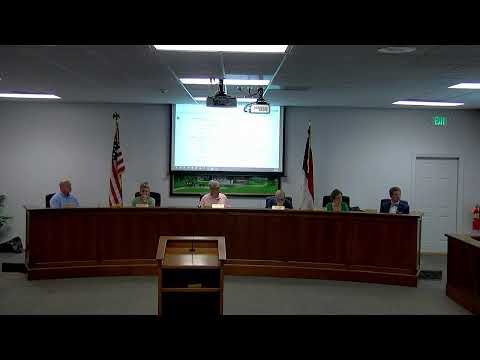
The Village of Clemmons on Monday heard a presentation on a drone-based AED delivery program intended to get automated external defibrillators to suspected cardiac-arrest scenes faster than traditional first responders.
Lisa (last name not provided), a nurse and researcher who presented the proposal and described the program’s local pilot, said the pilot launched in Clemmons on Sept. 8 in a limited area and will expand to two other North Carolina sites and three locations in James City County, Virginia. She and partners emphasized that faster AED access and immediate bystander CPR can improve survival from out-of-hospital cardiac arrest.
The presentation noted that roughly 350,000 cardiac arrests occur annually nationwide and that survival overall is under 10 percent; in suburban communities such as Winston-Salem and Clemmons, presenters cited survival rates of about 6 to 8 percent. The speaker said every minute without defibrillation reduces the chance of survival by about 10 percent and that AEDs carried by drones could bridge gaps where fire and EMS arrival is slower.
The drone described in the presentation carries an AED (the device weighs under 10 pounds in the demonstrator photos) and can lower the device for a bystander to retrieve while the telecommunicator instructs rescuers to continue CPR. The program relies on coordination among the sheriff’s office drone program, 9-1-1 telecommunicators, fire departments and local EMS. Chief Gary Stiers of the Clemens Fire Department was acknowledged as a local partner during the presentation.
Presenters said pilots and dispatchers are trained to recognize cardiac arrest and launch the drone when appropriate; the speaker also said the program must satisfy FAA regulations and other approvals before broader deployment. The pilot’s first phase covers a small area of Clemmons because of the drone’s current flight limitations; program staff said they will analyze response-time data over roughly 18 months to optimize station placement and measure whether the drone can arrive before fire or law enforcement in rural areas.
Council members and staff applauded the research collaboration; one council member encouraged community training and said organizers plan hands-on demonstrations at the Clemmons Community Day and other outreach events. The presenter said training will be available for residents and that 9-1-1 telecommunicators will guide bystanders to use the AED once it arrives.
The presentation closed with the presenter saying, “We can’t wait for our first survivor,” and council members thanked presenters for the briefing. No formal council action was taken on the drone program during the meeting.
The council packet will include follow-up details and timelines if additional approvals or code changes are required for broader deployment.