Get Full Government Meeting Transcripts, Videos, & Alerts Forever!
Get email alerts on the Peer Support And Education topic
No spam. Unsubscribe anytime.
NAMI Miami‑Dade presents helpline, outreach and early‑intervention programs to advisory board
Summary
NAMI Miami‑Dade described its education, peer‑support and helpline services to the advisory board, including local outcomes for programs such as Ending the Silence and QPR and the helpline phone number and languages served.
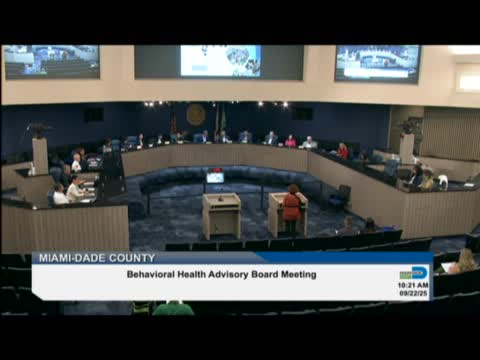
Susan Holtzman, president and CEO of NAMI Miami‑Dade County and a member of the advisory board, gave the board an overview of the affiliate’s programs on Sept. 22 and urged board support for peer‑led early‑intervention and family‑education services.
Holtzman described NAMI Miami‑Dade as one of the largest local affiliates nationally and summarized three program pillars: education, support and advocacy. “Our mission is to improve the quality of life for people with mental illness and their families through support, education and advocacy,” Holtzman said.
Holtzman reviewed statistics she said underscore early‑intervention priorities: about one in five U.S. adults experience mental illness each year, she said; “50 percent of all lifetime mental illness begins by age 14 and 75 percent by age 24,” she told the board. NAMI’s local programs include school‑based education starting in middle school, worksite stigma‑reduction programs and peer support groups for people with mental illness and for family members.
Holtzman described NAMI Miami‑Dade’s helpline and warm‑handoff practices. The helpline number she gave is (305) 665‑2540; the affiliate also fields texts and email inquiries through namimiami.org and offers services in English, Spanish and Haitian Creole. She said the helpline is staffed by trained peer volunteers and runs weekdays, with human responders available at other times to provide warm handoffs to 988 and mobile response teams when callers are in crisis.
Holtzman cited program outcomes she said the affiliate is tracking locally and nationally: 72 percent of youth in the Ending the Silence program improve protective factors, and 79.8 percent of QPR participants increase protective factors for suicide prevention. Holtzman also described support‑group outcomes and the affiliate’s partnerships with police departments and other local agencies.
Board members asked whether NAMI’s county funding had been fully restored in the recent budget process; Holtzman said she believed NAMI had not yet been fully restored to prior funding levels and the question would be followed up outside the meeting.
Why it matters: NAMI’s services target early identification, family support and peer connection — services board members identified as central to reducing crisis recidivism and improving adherence to treatment plans.
Holtzman encouraged board members to use and promote NAMI’s helpline and training programs and offered to collaborate on county outreach efforts.