Get Full Government Meeting Transcripts, Videos, & Alerts Forever!
Get email alerts on the Education Sel topic
No spam. Unsubscribe anytime.
Battle Ground board adopts Wayfinder high-school SEL curriculum after months of review
Summary
The Battle Ground School District Board voted 3–2 to adopt Wayfinder as its high school social-emotional learning (SEL) curriculum after a multi-year review, pilot and community discussion. The board and staff said implementation details, measurement plans and funding will be developed before lessons are widely used.
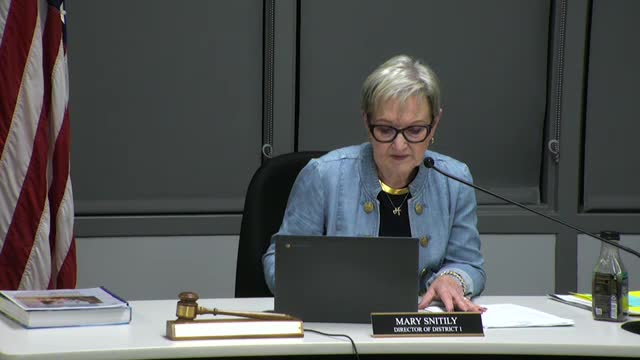
The Battle Ground School District Board of Directors voted 3 to 2 on Sept. 22 to adopt Wayfinder as the district's high school social-emotional learning curriculum, after a multi-month review, pilot lessons and extensive public comment.
Supporters on the board and district staff said Wayfinder met evidence-based criteria and CASEL's standards as a "select" program, and that staff would use grant funds and existing program budgets to pilot and scale the materials. Tamara (speaking for Eric Seegstorf), the district's curriculum lead present at the meeting, told the board: "I am here to simply ask what questions you have remaining. Answer those questions, and ask for your approval in implementing or adopting Wayfinder as our high school SEL curriculum." (Tamara, Sept. 22)
The board's decision followed weeks of committee work, student piloting and a public review. District staff and student representatives who piloted the materials said lessons aim to teach skills such as self-awareness, relationship skills and responsible decision-making. Student representative Itzel Contreras said she participated in piloting and that "they heard the comments, the concerns, the pros, and the cons" and that the curriculum team "really jotted that down" when shaping recommendations.
Why it matters: Board members and staff framed the adoption as a way to give students a common vocabulary and measurable interventions for conflict resolution, financial literacy and other nonacademic skills they said some students lack. Administrators emphasized the adoption does not make SEL therapy and said Tier 1 lessons were designed to be preventive; additional Tier 2 or Tier 3 supports would remain available through counselors and intervention teams.
Key facts and implementation notes - Adoption vote: 3 in favor, 2 opposed (motion passed 3 to 2). The motion read, in part, as a request to "approve the second reading and adoption of the high school SEL curriculum as presented." The transcript does not record individual roll-call names for that vote. - Curriculum designation: District staff said Wayfinder has been designated a CASEL "select" program, meaning an independent review found it aligns with CASEL's five competencies (self-awareness, self-management, social awareness, relationship skills, responsible decision-making). - Lesson length and cadence: Staff described individual Wayfinder lessons as roughly 30 minutes and said the likely cadence would be approximately once every two weeks or once a month, depending on school-level decisions and needs. - Implementation planning: A smaller committee of teachers and specialists will draft a roll-out plan if the board's adoption stands; the committee will determine whether lessons are delivered via dedicated times, inserted into existing classes or used as targeted interventions. - Adoption term: District staff said the adoption would be for a defined period (staff described "a 5-year adoption" process), at which point the board would again review materials and results. - Cost and funding: Board discussion referenced grant and ongoing funding questions. During the meeting staff and board members discussed different price estimates that had been cited in committee conversations (figures discussed in the meeting included about $50,000 and a $26,000 figure reported by a board member). District staff said grant, Title and other funding sources would be reviewed to cover ongoing costs.
What was debated Board members questioned whether the curriculum would add class time at the expense of academics, how it would be implemented across different courses, and whether the materials include content the community would find objectionable. Tamara and other staff said Wayfinder does not include lessons on gender identity and that the vendor and district had reviewed materials and communications to confirm that. Tamara told the board plainly: "Wayfinder does not have any of those lessons." (Tamara, Sept. 22)
Opponents on the board and some community members argued evidence for SEL's academic effect is modest and expressed concern about time trade-offs and community trust ahead of a local levy. Director Debbie Johnson said she would vote no because she was "not convinced" the curriculum would produce the measurable results she wanted and because she feared it could erode community trust.
Student voice and pilot experience Students who participated in pilot lessons and served on the review committee told the board they had regular meetings with the curriculum team and that student feedback shaped the recommendation. Student Itzel Contreras said students were involved "since last year" and that the committee collected student perspectives as part of its review.
Next steps and accountability District staff said a committee will finalize implementation steps and measurements, including identifying indicators to track such as survey and behavior data, and that the board would be presented periodic updates. Allison (executive staff) described a formal reconsideration process that can be triggered by community members or staff if concerns arise, and that instructional materials policies require review before removal.
Ending Board members split on whether the evidence and timing justified adoption now; the 3-2 vote approved Wayfinder with staff directed to develop a concrete implementation, measurement and funding plan and report back to the board for oversight.