Solano supervisors direct staff to continue talks on Collinsville shipyard legislation amid widespread public comment
Loading...
Summary
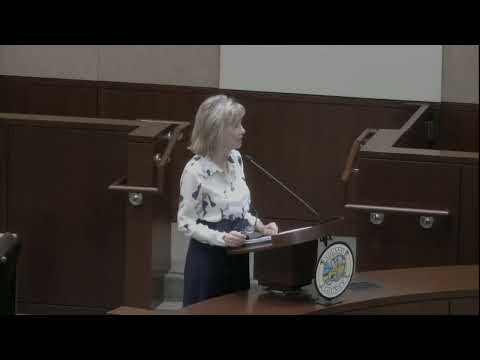
After hours of public comment for and against a proposed Collinsville shipyard and related state legislation, the Solano County Board of Supervisors voted 5-0 to direct staff to continue engaging with state partners on legislation consistent with county principles while seeking guardrails and local control.
The Solano County Board of Supervisors voted unanimously to give staff direction to continue engaging with state partners on draft legislation related to a proposed shipyard and industrial development in the Collinsville/Montezuma Hills area.
Supporters and opponents filled the public comment period, offering sharply different views on the project’s merits and risks. Opponents raised environmental, water and public-safety concerns and argued the county should not rely on an older environmental review. Supporters and several regional economic development advocates said the site could bring high-wage jobs and help revive domestic shipbuilding capacity.
Why it matters: the board’s direction asks staff to keep negotiating with the legislature and with GO-Biz on language that the county’s negotiators helped shape, while supervisors repeatedly sought stronger “guardrails” to preserve local land-use authority, require environmental study, and keep dispute resolution out of sole gubernatorial control.
Public comment: environmental advocates and local residents emphasized wildlife and groundwater risks at Collinsville and Montezuma Slough. One member of the Napa-Solano Audubon Society warned of bird-breeding habitat in the slough, and a local resident said the area sustains “40 confirmed species” and “another 20 probable species” of breeding birds. Plumbers and Steamfitters Local 343 President Fred Lehman said the timeline for the project “remains viable.” Contra Costa Resource Conservation District associate director Tracy Rogers Brandt urged the board to “refuse to rely on a 2,008 EIR.” Engineering consultant Ori Eliahu said the site “is uniquely suited for maritime uses” and described existing deepwater access and utility availability.
Board discussion: supervisors acknowledged strong public opposition and the short negotiation timetable, but several said the draft legislation preserved a role for local review. Supervisor John Vasquez (first referencing a board action that created the WDI ‘shape’ in 2008) said he had long supported a port at Collinsville and viewed the draft as giving the county the ability to study and set zoning standards. Supervisor Williams said she supported continuing to engage with state partners while seeking stronger protections, and repeatedly urged clearer language so the county would retain the ability to deny projects that failed local standards. One supervisor criticized language tying dispute resolution to the governor’s office, saying he “trust[ed] the governor about as far as I could throw him,” and asked for revisions to that provision.
Board action: after discussion, the board voted 5-0 to provide direction to staff to continue engagement with state partners and legislators on legislation “consistent with county principles,” to press for clearer local-control protections and for negotiated changes identified during the hearing, and to form an ad hoc group for ongoing oversight and stakeholder input.
What remains: supervisors and staff said the draft presented to the board is not final and is still being negotiated. Several supervisors requested that the county’s legislative team continue to press for (1) language preserving county discretion on zoning and permits, (2) clearer dispute-resolution procedures that do not default solely to the governor, and (3) specific mitigation and study requirements (for traffic, water, salt intrusion and air emissions) before any project approval. The board also recommended creating an ad hoc group to guide implementation and community engagement.
Next steps: staff will continue discussions with the governor’s office, GO-Biz and the identified legislators, and return to the board with further updates and recommended language changes. The board’s direction does not approve any project; it instructs county staff to pursue state-level language revisions and seek implementation guardrails.