Get Full Government Meeting Transcripts, Videos, & Alerts Forever!
Get email alerts on the Communications Staffing topic
No spam. Unsubscribe anytime.
Ferndale delays hiring a dedicated public‑information officer after hours of debate
Summary
The council approved two communications positions — a manager and a specialist — but deferred a separate PIO role after department heads and council members debated crisis‑communications needs and staffing priorities.
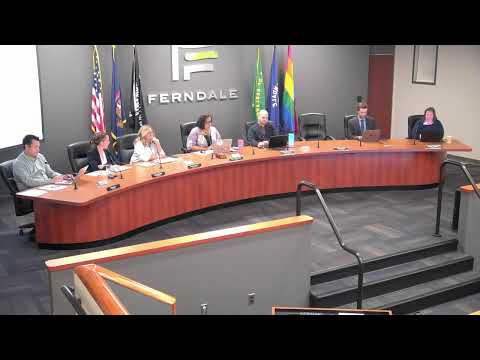
The Ferndale City Council on Sept. 8 approved two new communications positions — a communications manager and a communications specialist — but chose not to approve a separate dedicated public‑information officer (PIO) at this meeting.
Communications Director Riley presented a detailed staffing proposal that would have added a manager, a specialist and a PIO. Riley said the office of one has been stretched by routine operations, crisis response and a steady workload of print and digital items, including a quarterly print newsletter and management of multiple city social accounts.
“Content shouldn’t compensate for absence,” Riley said, describing how a single staffer has managed city communications across platforms and projects.
Fire Chief Theresa Robinson, Police Captain Casey O’Loughlin and Public Works Director James Jamieson all told council they value a trained PIO for major incidents, citing past events in which outside PIO resources advised local staff. Robinson said a PIO with emergency‑services knowledge helps “know what is proper to say, what is not proper to say” and prevents inadvertent missteps during fast‑moving incidents.
Councilmembers and the city manager, however, expressed concern about adding a full‑time PIO immediately. One councilmember noted a previous configuration in which the police department employed a full‑time communications professional and said a non‑uniformed communications specialist could be more cost‑effective than assigning an officer. Another member observed that department chiefs often serve as on‑scene spokespersons for single incidents and suggested training and cross‑coverage instead of hiring a dedicated PIO now.
The council passed an amended motion to approve the communications manager and specialist positions and asked staff to return later with implementation details and a plan for crisis communications training and responsibilities. City staff said the hires will be posted and filled per the city’s normal HR procedures; the council asked for a report back on how the new positions affect call‑tree navigation, SeeClickFix response timeliness and crisis coverage.
What was discussed
- Workload and services: Riley presented raw figures (about 60,000 incoming calls to the city phone line in 2024 and roughly 41,000 so far in 2025) and SeeClickFix volumes (1,527 requests in 2024, 1,283 so far in 2025). Riley proposed reorganizing the phone menu to reflect demand and elevating communications so it appears earlier in the automated tree.
- Crisis communications: Chiefs and department heads emphasized the need for a PIO with emergency‑services background for major incidents; they described instances in which outside PIOs or chiefs had to fill that gap.
- Implementation and cost tradeoffs: The council discussed possible alternatives — outsourcing parts of the newsletter, reinstating an email newsletter, or using fellowships/grad‑student placements to fill some capacity while the city evaluates a permanent PIO.
Next steps
Human Resources and the city manager will post the communications manager and communications specialist positions; the council requested a follow‑up report on implementation, a crisis communications plan update and training options for department staff. The PIO role remains under consideration and may be revisited after the new hires are in place.
No formal budget ordinance or contract award was made for a PIO at this meeting.