Get Full Government Meeting Transcripts, Videos, & Alerts Forever!
Get email alerts on the Policing Oversight topic
No spam. Unsubscribe anytime.
City Council oversight hearing spotlights NYPD discipline, CCRB cooperation and case outcomes
Summary
A New York City Council Committee on Public Safety oversight hearing examined the NYPD disciplinary system, cooperation with the Civilian Complaint Review Board (CCRB) and recent high‑profile cases, with department officials describing procedural changes and the public advocate criticizing outcomes.
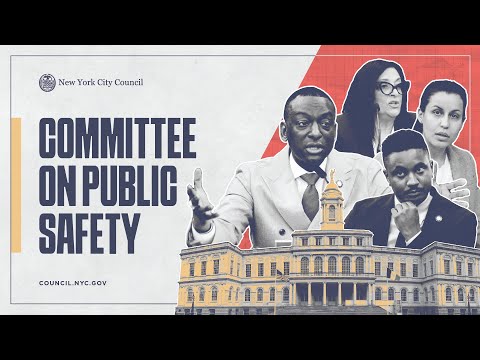
Councilman Yousef Salaam, chair of the New York City Council Committee on Public Safety, opened an oversight hearing examining the New York Police Department’s disciplinary system and the Civilian Complaint Review Board (CCRB), focusing on how complaints are investigated, evidence is shared and disciplinary recommendations are resolved.
“The department's disciplinary system must be fair and effective,” said Deputy Commissioner Michael Gerber, the NYPD’s deputy commissioner for legal matters, during opening testimony. Gerber told the committee the department has changed several policies and signed memoranda of understanding (MOUs) with the CCRB to improve timeliness and information sharing, and that in most cases the CCRB receives NYPD materials within 30 days.
The hearing probed three broad areas: whether the NYPD provides timely, unredacted evidence such as body‑worn camera footage to the CCRB; how the department treats CCRB substantiations when recommending or imposing discipline; and whether recent changes have reduced delays and unexplained departures from CCRB recommendations.
Gerber described several procedural changes the department says have increased case processing speed and concurrence with CCRB recommendations. He said documents requested by the CCRB are generally produced in two to three weeks, unredacted video in a little over a week, and redacted video on average within a month. He cited reversals of an internal “short statute‑of‑limitations” policy and new MOUs that, he said, ensure the CCRB receives materials within 90 days when there is a parallel criminal or Force Investigation Division (FID) inquiry. Gerber provided the committee with department statistics showing a drop in short‑SOL closures after an order on March 1 ending the automatic short‑SOL practice.
Public Advocate Jamana Williams delivered a sharply critical opening statement. Williams cited several specific cases, including the October shooting of Alan Felice by Officer Jonathan Rivera, saying department leadership’s decisions on discipline have undermined public trust. “This is not accountability, and it's certainly not justice,” Williams said, adding that officers sometimes face no criminal charges and that disciplinary outcomes can be limited to recommended termination or no discipline despite CCRB findings.
Williams and other advocates at the hearing raised concerns that past practices—such as delayed evidence sharing that let cases lapse under the statute of limitations, insufficient CCRB staffing, and perceived departures from recommended discipline—have contributed to a culture in which misconduct is not consistently punished. She also cited the city’s fiscal exposure from misconduct lawsuits, saying the NYPD cost taxpayers over $205,000,000 last year in settlements and judgments.
Gerber acknowledged disagreement can occur in individual cases and described the statutory and charter framework: the CCRB investigates allegations of excessive force, abuse of authority, discourtesy, offensive language and false statements; the CCRB can substantiate and recommend discipline; under state law and city charter provisions, disciplinary proceedings must be initiated within an 18‑month statute of limitations unless the conduct is a crime; and the police commissioner is the final arbiter of discipline and must explain in writing any departure from CCRB recommendations. Gerber said those written explanations are posted on the CCRB website.
He also gave the committee several data points the NYPD presented: the department exercised a commissioner retention provision 93 times in 2024 and 24 times so far this year; the department reported adjudicating matters against 637 officers in 2023, 679 in 2024 and 643 so far in 2025 (figures presented by the NYPD); and reported concurrence rates with CCRB recommendations of 56% in 2023, 30% in 2024 and 76% in 2025, rising to 91% in 2025 when short‑SOL closures from early in the year are excluded.
Committee members asked about the processes that had led to case closures before the March 1 order, how MOUs now operate when parallel criminal or FID investigations exist, and what additional resources the CCRB needs to investigate record complaint volumes. Gerber said legal bureau staff and a CCRB liaison unit are in daily contact with CCRB staff to provide requested materials and noted the department had cleared prior backlogs.
The hearing compressed presentations from NYPD administration witnesses—including Deputy Commissioner Tarek Raman (department advocate) and Director Josh Levin—and a public advocate critique that pressed for swifter, more transparent discipline and fuller compensation to families affected by alleged misconduct. Members of the committee indicated ongoing interest in follow‑up information and documentation on the department’s new procedures and the written explanations posted when the police commissioner departs from CCRB recommendations.
The committee did not take any formal votes during the opening testimony portion covered in the transcript provided. Additional testimony, questioning and potential committee directions were scheduled later in the hearing record beyond the excerpt provided.