Get Full Government Meeting Transcripts, Videos, & Alerts Forever!
Get email alerts on the Permanent Supportive Housing topic
No spam. Unsubscribe anytime.
City presents service agreement with CenterP oint for 24-unit permanent supportive housing at 810 J Street
Summary
City staff and CenterPoint Inc. described a proposed service agreement to operate a 24-unit permanent supportive housing program at 810 J Street, funded by a mix of HOME-ARP funds, housing vouchers and a Continuum of Care grant; council took public testimony but did not record a final vote at the Sept. 22 meeting.
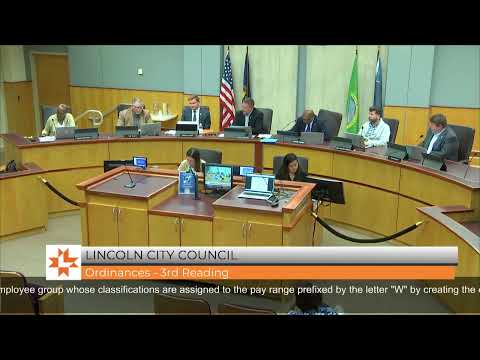
City of Lincoln staff and representatives of CenterPoint Inc. presented a proposed service agreement on Sept. 22 to operate a 24-unit permanent supportive housing program at 810 J Street and described funding sources that would cover early operating costs.
The agreement, introduced by Dan Marvin, director of urban development, would pair a city lease of the property at 810 J Street with a multi‑year services contract for CenterPoint to operate permanent supportive housing for people experiencing chronic homelessness. Marvin said the building contains 24 apartments and that the project is expected to begin receiving residents in November or December. "The first year contract for 645000 will pay out of those 3 different sources," Marvin said, answering council questions about the funding flow.
Why it matters: City and nonprofit leaders told the council that permanent supportive housing (PSH) reduces emergency service use and helps people with serious mental illness and substance‑use disorders stabilize. Jeff Chambers of the University of Nebraska–Lincoln Center on Children, Families and the Law said the share of people classified as chronically homeless in Lincoln has increased and that PSH is effective at reducing public costs. "Permanent supportive housing is a proven solution to ending chronic homelessness," Chambers said, citing a local study that found high per‑person acute‑care costs for chronically homeless residents.
Funding and structure: Marvin told the council that the operating revenues and contract payments will be paid into city funds and then used to reimburse CenterPoint for verified expenses. He identified three principal revenue sources: housing vouchers administered through the Lincoln Housing Authority, a Continuum of Care grant awarded to the city’s continuum of care, and remaining HOME‑ARP funds the city must expend by 2029. He described an initial operating budget in the first year of about $645,000 and said CenterPoint participated early in building design so operator needs were incorporated into the facility.
CenterPoint’s CEO Tammy Lewis Arndt addressed the council in support of the contract, calling PSH "more than just a roof over someone's head" and describing the nonprofit’s experience providing supportive housing and behavioral health services. "When people have safe housing and supportive services, they get better sooner for longer," she said.
Public testimony: Jeff Chambers summarized research showing the community cost of chronic homelessness and argued PSH yields measurable cost offsets in emergency health care, law enforcement and jails. Chambers said peer‑reviewed studies typically show 20–60% reductions in community care and emergency service costs after placement in PSH.
Council action and next steps: Council members asked several funding and program questions, and staff and speakers provided clarifications. No final council vote on the ordinance or the full service agreement was recorded in the Sept. 22 transcript; Marvin and others indicated funding sources and verification requirements but the item was not shown as adopted at that meeting. Staff said detailed contract documents and expenditure verifications will be part of the implementation if the council approves the ordinance at a later meeting.
If adopted, the program would be operated by CenterPoint with a combination of vouchers, Continuum of Care grant funds and HOME‑ARP funds underwriting the initial operating years.