Get Full Government Meeting Transcripts, Videos, & Alerts Forever!
Get email alerts on the Fy2024 Audit topic
No spam. Unsubscribe anytime.
Bangor City audit gets unmodified opinion; auditors cite repeat bank-reconciliation weakness and multiple federal compliance issues
Summary
Auditors told the City Finance Committee Sept. 22 that Bangor’s FY2024 financial statements received an unmodified opinion, but the audit identified a repeat material weakness in cash reconciliations, several significant deficiencies, and compliance findings affecting federal grants including ARPA, CDBG, WIC and SNAP.
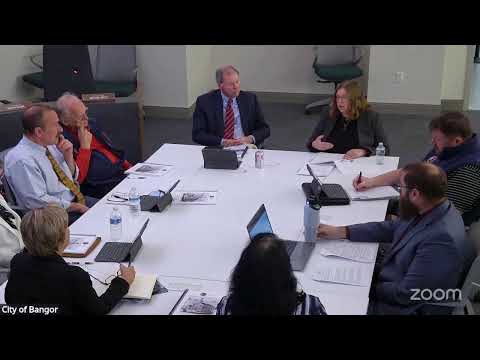
Bangor City’s Finance Committee reviewed the fiscal year 2024 audit at a special meeting on Sept. 22. Auditors reported an unmodified opinion on the city’s financial statements but flagged a repeat material weakness in bank and cash reconciliations and several federal-compliance findings affecting multiple grant programs.
The audit matters matter because weaknesses in cash reconciliations and grant compliance increase the risk of undetected errors and could affect federal reporting and reimbursements. Auditors said the city’s sizable federal spending — just shy of $30,000,000 in the year under review — made single-audit compliance testing a major part of their work.
Auditors summarized the drivers of the extended audit timetable and the primary findings. They said implementation of recent Governmental Accounting Standards Board pronouncements (GASB 96 for subscription-based IT arrangements and GASB 87 for leases) required the city to identify and record many contracts as assets and liabilities, adding substantial work. Auditors also said carryover issues from the FY2023 audit, staffing turnover in finance (including the deputy finance director), and a backlog of unreconciled accounts slowed progress.
“We did have a material weakness related to the cash account reconciliations, and that was a repeat,” said Jim, one of the auditors. The auditors described the material weakness as linked both to late reconciliations and to the increased risk of errors when reconciliations are delayed. City staff acknowledged the backlog and said they are working to catch up; an assistant finance director told the committee that staff were “currently … up to January, February, getting the activity posted and reconning them.”
The auditors reported the audit produced a number of audit adjustments and a “significant deficiency” related to the city’s preparation and review of its financial statements. They said repeated adjustments increase audit risk and make it harder to rely on preliminary statements.
On federal compliance, auditors said the city’s federal expenditures required a single audit under the uniform guidance (threshold $750,000) and that they tested 10 major federal programs. Seven of those programs yielded compliance findings; three received unmodified compliance opinions. Programs tested included Women, Infants, and Children (WIC), SNAP, federal transit cluster projects, Federal Highway Administration grants, substance-abuse and mental-health block grants, and other state- and federal-pass-through programs.
Key federal-related findings described to the committee included: - Time-and-effort documentation: payroll charges to multiple health and community-services grants were sometimes allocated based on budgeted amounts rather than actual time worked. Auditors said the department is working on a process to charge actual time to grants. - Subrecipient monitoring and reporting: in some Community Development Block Grant (CDBG) instances, staff outside the program charged expenditures without director oversight; in other cases the city did not complete required FFATA/FFATA-style subrecipient reporting for certain subawards. - Late reporting: auditors identified monthly reports for opioid and other health grants that missed the grant deadlines (monthly reports required within 15 days of month-end). Auditors also found one ARPA expenditure that was reported in the wrong quarter (it should have been reported in the quarter ending Sept. 30 but was reported in the quarter ending Dec. 31). - Procurement and suspension/debarment: the school department’s use of ARPA funds for playground equipment triggered federal procurement and suspension/debarment checks; auditors found documentation of those checks or formal procurement steps lacking in some instances. - Grant-match transfers: several state or federal grants require a local match. Auditors found the city’s typical process — recording the local contribution at the time the grant is accepted — sometimes did not result in timely transfers when grant amendments changed amounts. Auditors said the amounts were not material in FY2024 but the control process needs strengthening to avoid larger problems on bigger grants.
On financial results, auditors said the city’s overall general-fund balance increased by just over $1 million between FY2023 and FY2024 and that the city ended the year about $1.6 million over the adopted budget (overall result stated by the auditors). Tax collections within the fiscal year were reported in the high 90s as a percentage of commitment (auditors gave examples around 97–98%). The auditors also presented comparative metrics (debt, fund-balance ratios) against peer communities.
Auditors noted corrective-action plans are included in the compliance report and that management responses were provided for each finding. They said the compliance report will be filed with the federal Audit Clearinghouse as required. The committee and staff discussed next steps: auditors said they will work with city staff to draft process changes and templates (for reconciliations, procurement checks, subrecipient reporting and grant time-and-effort tracking) and that a follow-up meeting was already scheduled to advise on process improvements.
No formal votes were recorded during the special meeting; the session focused on review, discussion, and planning corrective actions. The committee adjourned after the auditors’ presentation and questions.