Get Full Government Meeting Transcripts, Videos, & Alerts Forever!
Get email alerts on the Real Estate Fraud topic
No spam. Unsubscribe anytime.
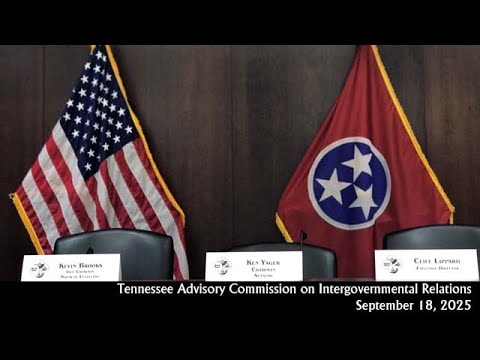
TACIR panel pushes notary training, journal rules and register‑of‑deeds review in real estate fraud report; final approval deferred
Summary
TACIR’s real‑estate fraud report recommends notary training, mandatory identity verification and journaling for in‑person notarizations, and empowering registers of deeds to flag suspicious recordings — but commissioners deferred final approval and asked staff to refine a proposed ID requirement for filers.
TACIR staff presented a final report on protecting Tennesseans from real‑estate fraud and recommended (1) training for in‑person notaries on fraud recognition, (2) identity verification and mandatory notary journals retained for five years, and (3) authorization for county registers of deeds to establish fraud referral and review processes. Commissioners asked staff for additional work on a possible register‑of‑deeds ID requirement before approving the report.
Report highlights
Staff said the report was prepared under Public Chapter 941 (Acts of 2024) and summarized different fraud schemes, how states have responded, and best practices for local officials. The first recommendation calls for in‑person notaries to complete instructional coursework on notary laws, ethical requirements and fraud prevention — mirroring training already required for remote online notaries beginning January 2026. The second recommendation would require in‑person notaries to verify signer identity by government credentials and maintain a journal that records identifying evidence for all in‑person notarizations for at least five years. The third recommendation asks the General Assembly to authorize counties to create fraud referral and review processes when registers of deeds suspect fraudulent filings; staff cited Illinois’ approach as a possible model.
Commission reaction and action
Representative Parkinson expressed concern that the report did not go far enough on a register‑of‑deeds requirement to collect identification for filers of instruments such as quitclaim deeds. Staff explained the report discusses prior versions of legislation and recent pilots in other jurisdictions (Lee County, Florida) that are still being evaluated; staff said they would follow up and try to incorporate clearer language.
After debate and questions about background checks, bond requirements and the practicality of registering copies of IDs, Commission members moved to defer final approval and asked staff to return at the next regularly scheduled meeting (december/early December) with refined language on the ID/register‑of‑deeds issue. The motion to defer passed by voice vote.
Why this matters
Commission staff emphasized that notaries and registers of deeds are on the front lines of preventing fraudulent transfers. Staff told commissioners that detailed notary journals can help defend notaries whose stamps are later forged and that bond and errors‑and‑omissions insurance can protect both notaries and consumers.
What the report would change (if enacted)
- Require in‑person notaries to complete approved training at initial commission and renewal. - Require verification of identity for in‑person notarizations by government ID and retention of a journal for five years including description of the evidence used to identify signers/witnesses. - Authorize counties to adopt a fraud referral and review process for suspicious real‑estate filings.
Next steps
Commissioners asked staff to refine the report language about requiring IDs at registers of deeds and to consider added penalties or procedural mechanisms to make enforcement practical. Final approval of the report was deferred until the commission’s next meeting in early December.