Lifetime Citizen Portal Access — AI Briefings, Alerts & Unlimited Follows
HARB approves cellular equipment in Flagler College bell towers with removal condition
Loading...
Summary
The Historic Architecture Review Board approved T‑Mobile’s plan to place cellular antennas inside Flagler College’s bell towers, requiring equipment to match mockups and be removed if contract ends or equipment becomes obsolete.
The City of St. Augustine Historic Architecture Review Board on Sept. 18 approved an application by T‑Mobile to install cellular antennas inside the arched openings of the bell towers at 74 King Street (Flagler College), with conditions that installation match the mockups shown to the board and that any abandoned or obsolete equipment be removed without damaging the historic fabric.
Board staff described the proposal as placing two antennas in each tower, mounted on ballasted stands (nonpenetrating), painted an extremely matte black and set behind matte black backdrop panels to reduce visibility. Staff said the applicant removed several existing unused items from the towers during mockups and proposed to paint other visible mechanical items with the same matte finish to reduce visual contrast. Staff recommended approval if the board found the work consistent with the Secretary of the Interior’s Standards for Rehabilitation numbers 2, 5 and 9, with the condition that visible mechanical equipment be painted to minimize impact.
The applicant said the installation aimed to improve 5G coverage and capacity downtown and in peak-event conditions, and submitted a letter of support from the St. Johns County Sheriff’s Office IT department. T‑Mobile representatives said temporary on-site mockups and photographs were used to test visual impacts; they removed existing speakers and a microwave antenna during the mockup process and measured a net reduction in visible equipment area after their proposed installation.
Several members of the public spoke during the hearing. Historian Leslie Keys noted concern about potential physical damage to the building and asked what would happen to equipment when it became outdated. Joanne Chalfont and others urged caution and oversight after installation. The applicant replied that the mounts are nonpenetrating except for a small GPS antenna (4" x 4") that would require two small screws, and that final mechanical and structural work would go through the city’s permit process. The applicant also said the agreement includes termination language allowing removal if the equipment is no longer needed.
Board members discussed sightlines, mockup accuracy at different lighting conditions, and the removal of speakers that had been visually conspicuous. Several commissioners who viewed the mockups in person said the mockups reduced visibility from most public vantage points but acknowledged the antennas may be visible under some lighting conditions. Commissioners asked the applicant to ensure permits match the approved mockups and recommended that staff review permitting documents for conformity.
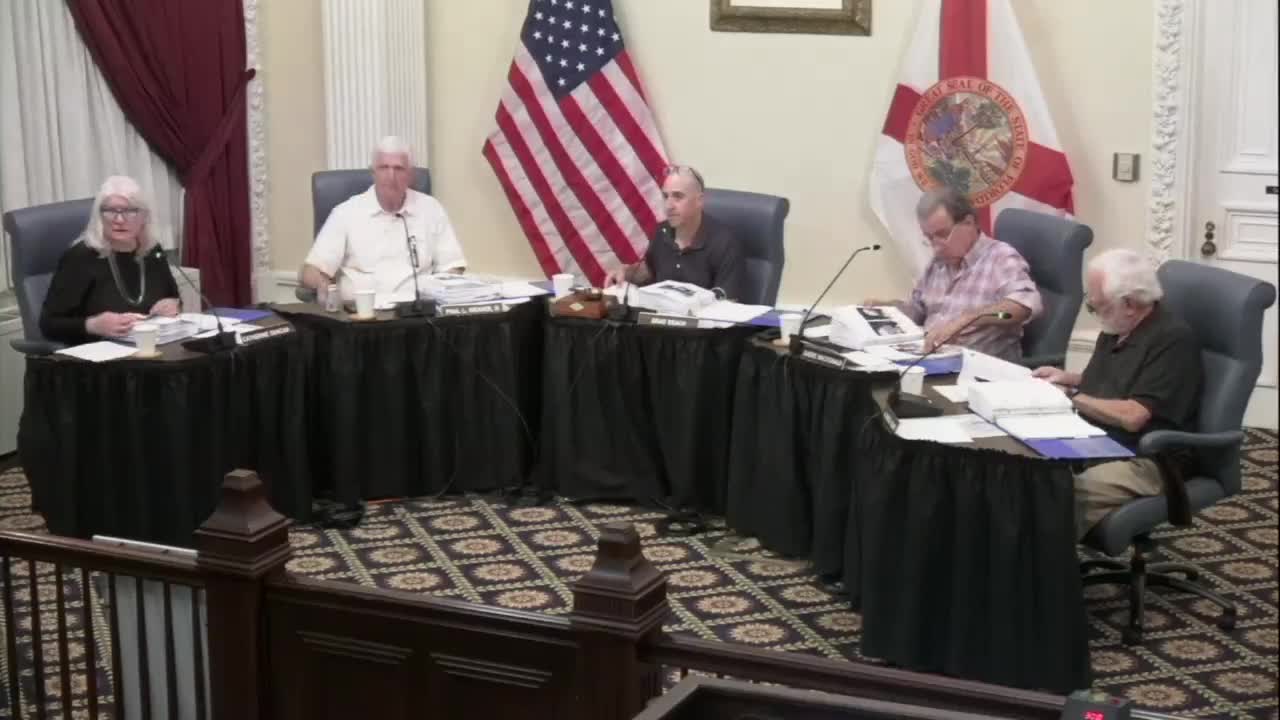
Motion and vote: The board voted to approve the certificate of appropriateness for the installation of cellular equipment at 74 King Street (application HP2025‑0060) with the conditions that the installed equipment match the mockups shown to HARB and that any equipment abandoned or rendered obsolete by termination of the lease be removed without damage to the building. The motion passed unanimously (recorded votes: Catherine Duncan — yes; Paul Weaver — yes; Eric McDonald — yes; Randall Rourke — yes; Brad Beach — yes).
The board’s approval was conditional on later permit-level review; staff said final structural details, conduit penetrations and any minor exterior penetrations would be reviewed during permitting and must conform to the HARB approval.
The board’s action records that the work will be allowed but monitored through the usual permit and follow‑up processes to limit visual and physical impacts on the National Historic Landmark building.