Get AI Briefings, Transcripts & Alerts on Local & National Government Meetings — Forever.
Speaker identifying as 'HHS secretary' says FDA will require full safety information in broadcast drug ads
Loading...
Summary
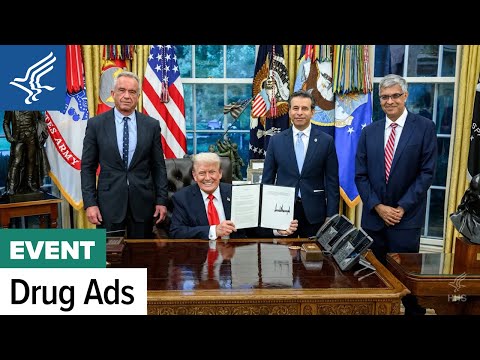
A recorded statement by a speaker identifying himself as Robert F. Kennedy Jr. said the Food and Drug Administration will require television and radio prescription drug advertisements to include full safety information on screen.
A recorded statement by a speaker identifying himself as Robert F. Kennedy Jr. said the Food and Drug Administration will require full safety information to appear on television and radio prescription drug advertisements.
The speaker said the change follows a memorandum from President Trump and described it as a move toward "radical transparency." He said the requirement would force companies to "list important warnings, common side effects, and dangers directly in the ad." The recording concluded with the phrase "Produced by The US Department Of Health And Human Services."
Why it matters: Broadcast prescription drug advertising reaches large audiences and can shape patient requests for medications. Requiring full safety facts to appear in ads would alter how pharmaceutical companies present risks and could affect clinician-patient conversations, according to the speaker.
In the recording the speaker said that since 1997 regulators had allowed drug ads to avoid full warnings on TV or radio by providing a brief statement of risk and sending viewers elsewhere for details. "Since 1997, regulators have allowed drug ads to avoid full warnings on TV or radio," he said, adding that practice opened the door to "a tsunami of misleading advertising." He also said drug ads "drove up prescription drug costs and distorted doctor patient conversations."
The recording did not provide supporting documents, cite a specific FDA rule or docket number, or specify an effective date or timeline for implementing any new requirement. The speaker said, "Thanks to president Trump's memorandum signed last week, the wheels are now in motion to require every broadcast prescription drug ad to display its full safety facts on screen," but the statement did not outline how the FDA would proceed, whether it would issue a formal notice of proposed rulemaking, or which statutory authority would be used.
The recording contains direct policy claims but does not include statements from the Food and Drug Administration or the U.S. Department of Health and Human Services confirming the action. The speaker identified himself at the start of the recording as "your HHS secretary." The recording did not supply documentation verifying that title or showing formal agency action.
Quotes in the recording include: "No more hiding vital information in small print or pushing it off to a website or a +1 800 number," and "It's all about radical transparency and ensuring that you stay fully informed." The statement also said, "We're rebuilding trust between doctors and patients and stopping the overmedicalization." These are assertions by the speaker and are presented here as such.
Context and limits: The recording frames the change as restoring more complete on-screen disclosures in broadcast ads. It did not specify enforcement mechanisms, whether printed or onscreen formats would be standardized, or how the change would affect existing FDA guidance. It also did not indicate whether any federal rulemaking steps (for example, notice-and-comment procedures) had begun, or whether other agencies or courts would be involved.
Ending: The claims in the recording, including that the FDA will require full safety information and that the announcement was produced by the U.S. Department of Health and Human Services, are reported as statements from the recording. No corroborating agency notices or documents were included in the transcript.