Get Full Government Meeting Transcripts, Videos, & Alerts Forever!
Get email alerts on the Tax Policy Private Roads topic
No spam. Unsubscribe anytime.
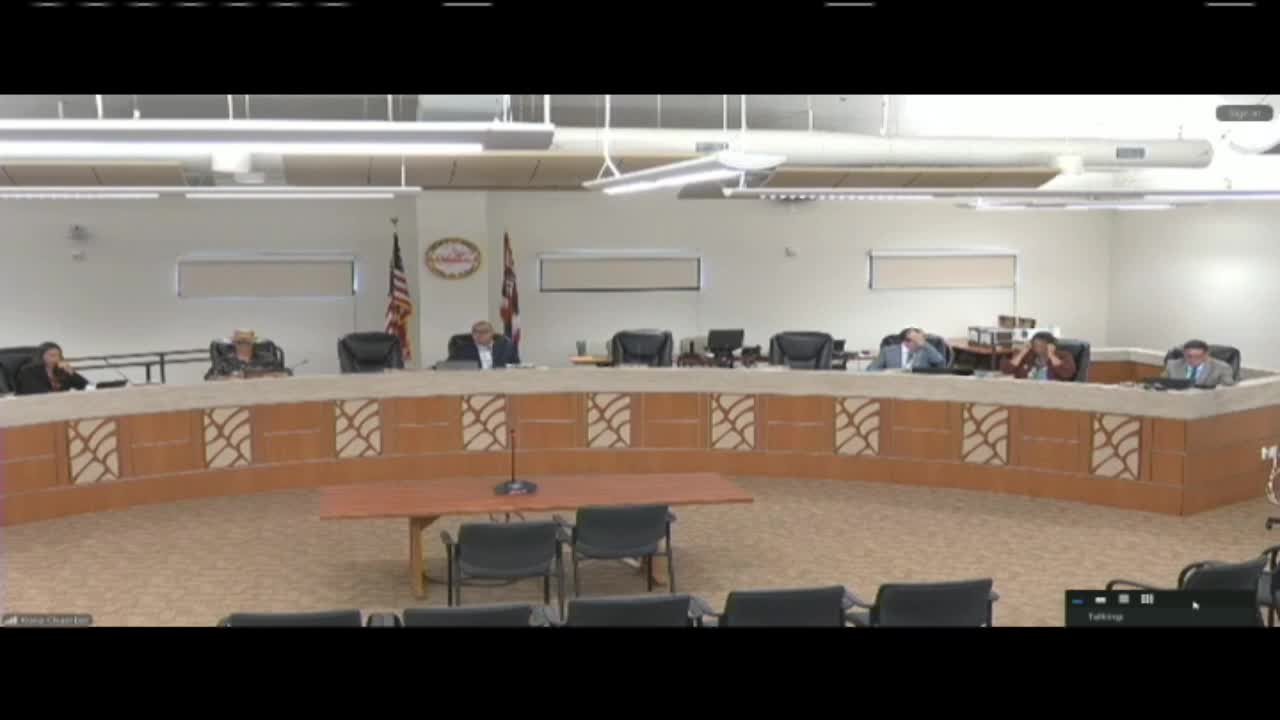
Council debates private‑road tax credit (Bill 38); amendment adopted but measure held over for further review
Summary
Councilmembers and public debated Bill 38, which would create a modest real‑property tax credit for homeowners who spend money on private road maintenance. The council adopted an amendment adding a limited review/sunset mechanism but did not complete second reading and held the bill over for further consideration.
The Hawaii County Council held further action on Bill 38 — a proposed tax credit aimed at private‑road maintenance — after an extended public comment period and council debate on Sept. 17. The body adopted an amendment but did not complete second and final reading; the matter will return to council on Oct. 8.
What the ordinance would do: Bill 38 (draft 2) would add a private‑road tax credit to county code, allowing eligible homeowners to claim up to $250 against their real property tax bill when they, individually, spend at least $75 annually on maintenance of a private roadway that is publicly accessible and managed by a road maintenance organization. Advocates said the credit would help homeowner associations and voluntary groups maintain miles of privately maintained but publicly used roads in subdivisions developed without county infrastructure.
Public testimony and proponents’ arguments: Several residents from Puna and Hawaiian Acres and nonprofit advocates told the council the measure would provide a modest but meaningful incentive for road maintenance and could increase safety and emergency access. Patty Pinto and multiple residents described current out‑of‑pocket maintenance efforts and said the credit would help secure access for school buses and emergency responders.
Opposition and reservations: Some councilmembers and commenters expressed concerns that the credit might be difficult to administer, that voluntary associations may not spend funds on roads even with the credit, and that the program would reduce county property‑tax revenue. Several councilmembers also urged a formal review mechanism to evaluate whether the credit produced the intended results.
Amendment and procedural outcome: Councilmember Kalimba moved to amend Bill 38 to include a predetermined review/sunset mechanism; that amendment (communication 203.19) passed on a recorded vote. Subsequent efforts to suspend the rules and conclude second reading failed on a separate procedural motion, and the measure was held over. Council records show the amendment was adopted and the bill will be returned for further consideration on Oct. 8.
Next steps: Because the council adopted an amendment and then voted to hold the bill over, staff will prepare ordinance text reflecting the amendment and any requested rule language and the item will be taken up again at the next scheduled council meeting for second and final reading. The finance and real property tax office indicated a rules‑based application process would be required if the credit becomes law.