Get Full Government Meeting Transcripts, Videos, & Alerts Forever!
Get email alerts on the International Security topic
No spam. Unsubscribe anytime.
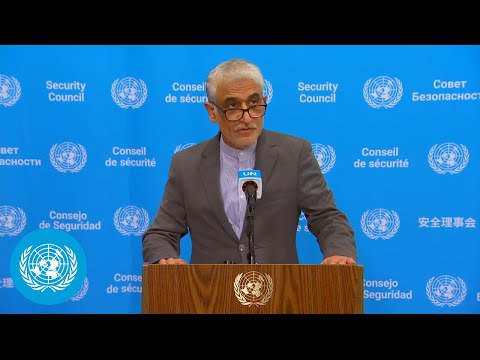
Iran says Security Council vote to continue sanctions is unlawful, warns diplomacy at risk
Summary
Iran's representative to the United Nations criticized a Security Council vote to continue sanctions that had been terminated under U.N. Resolution 2231, calling the action "illegal" and a "political abuse of process."
Iran's representative to the United Nations criticized a Security Council vote to continue sanctions that had been terminated under U.N. Resolution 2231, calling the action "illegal" and a "political abuse of process." The representative said the measure "undermined the council impartiality and credibility" and warned the decision weakens diplomacy and risks "dangerous consequences for nonproliferation."
The statement, delivered during council proceedings, said the vote was driven by the United States, the United Kingdom and France and singled out an Italian notification that Iran said attempted to reimpose snapback sanctions in violation of the Joint Comprehensive Plan of Action (JCPOA) dispute mechanism. The representative characterized that notification as "baseless, illegal, and unjustified" and said it "bypassed the JCPOA dispute mechanism" and therefore had "no legal foundation."
The representative also accused the E3 and Israel — and said the United States enabled an attack on Iran's safeguarded nuclear facilities — and defended Tehran's nuclear program as peaceful and under International Atomic Energy Agency (IAEA) safeguards. He said those who "failed to honor their commitments" were misusing Resolution 2231 to try to reimpose sanctions. "This move is a political abuse of process," he said.
On the vote itself, the representative said the result was divided and showed "there is no consensus in the council," adding Tehran "recognize[s] no obligation to implement it." The transcript does not include a roll-call tally in the record provided and does not specify whether the resolution was adopted; the speaker described the outcome as a "divided vote" and said the action "weakened the council" and "undermines diplomacy."
Later in the proceedings a delegate asked whether Foreign Minister Raji, who the speaker said would be in New York next week with the president, was prepared to meet European counterparts and make new concessions. The representative replied that Iran would not accept preconditions but said Tehran remained open to diplomacy: "We cannot have any precondition just now. But we are ready for diplomacy, and the door of diplomacy will open forever," he said, adding that Iran would decide "to whom and on what basis" it would negotiate.
The council record in the provided transcript contains the representative's formal remarks and the short question-and-answer exchange; it does not include a documented vote tally, the text of the resolution, or statements from other member states in the excerpt provided.