Get Full Government Meeting Transcripts, Videos, & Alerts Forever!
Get email alerts on the Homeless Services Animals topic
No spam. Unsubscribe anytime.
Board approves Waterfront Rescue Mission kennel with neighbor concerns; staff to review operational plan
Summary
The Board of Adjustment approved a conditional use allowing Waterfront Rescue Mission to place an on-site kennel for clients' pets at 380 West Herman Street, with staff to review site plan and operations. Neighbors raised concerns about sanitation, disease transmission and animals waiting outside during intake.
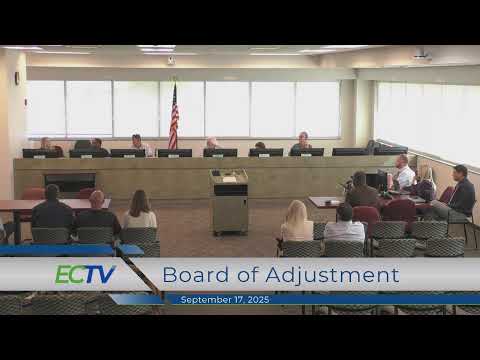
The Escambia County Board of Adjustment on Sept. 17 unanimously approved a conditional use (CU2025-11) allowing Waterfront Rescue Mission to locate a kennel on its campus at 380 West Herman Street to temporarily house clients’ animals while the individuals access shelter and recovery services.
Staff recommended approval after finding the proposed kennel met Land Development Code criteria for compatibility, utilities and circulation; the board voted 5-0 to adopt staff findings. The board also accepted a site-plan exhibit that the applicant provided at the hearing and encouraged continued coordination with county animal-control partners.
Waterfront Rescue Mission representatives described a prefabricated, climate-controlled kennel intended to offer eight interior dog boxes with eight exterior runs (capacity typically eight animals, with the ability to double temporarily in exceptional circumstances). The kennel structure will be surrounded by chain-link fencing, include interior drains tied to the sewer system, and occupy an area behind the mission’s Life Builder building. Waterfront representatives said the mission already operates within a secured campus that includes privacy fencing and adjacent mission-owned buildings that will provide buffering.
Staff (Andrew Homer) told the board the site is about 0.62 acres, zoned heavy commercial/light industrial, and within a 20-year wellhead travel-time contour (not subject to the stricter seven-year wellhead restrictions). Staff noted that on-site water, electric and sewer services were available, and that specific waste- and noise-management practices would be reviewed during subsequent site-plan review.
Neighbors and nearby property owners who spoke at the hearing raised repeated concerns about sanitation, infectious-disease risks and animals running loose before intake. Dr. Joanne Glesser, who said she and her husband own properties abutting the mission, described past experiences volunteering at the county animal shelter and recounted illness she attributed to pathogen exposure from animals. Neighbors asked for a concrete intake process and assurances that animals would be corralled, vaccinated and screened before accessing mission services.
Waterfront representatives said they had consulted with Escambia County animal-control staff (county animal shelter leadership) and that the shelter had offered to help with intake procedures — vaccinations, deworming and scanning for dangerous-dog records — and to provide training on sanitation and animal handling. During the hearing Waterfront offered to make intake coordination a condition of campus access (i.e., animals accompanying clients would be checked by animal-control prior to clients entering mission services).
Board members and staff urged Waterfront to document an operational plan for animal intake, sanitation, and handling as part of the site-plan review. The board voted to approve the conditional use on staff findings; staff will require the applicant to complete the site-plan and operational reviews, and the county’s animal-control staff will be involved in developing intake and sanitation procedures.
The board’s conditional-use approval authorizes the kennel use on the property subject to standard site-plan review and operational oversight by county staff and animal-control partners. Neighbors were encouraged to pursue continued communication with Waterfront and county animal-control to address intake logistics and public-health concerns.