Get Full Government Meeting Transcripts, Videos, & Alerts Forever!
Get email alerts on the School Safety topic
No spam. Unsubscribe anytime.
District presents FSAT results and new campus security steps; staff report 1,171 threat assessments in 2024–25
Summary
The district reviewed the Florida Safe Schools Assessment Tool (FSAT) results and outlined security upgrades — cameras, card readers, storeroom locks — in response to new state requirements and local threat assessments. Officials reported about 1,171 threat assessments in 2024–25 and said roughly 80% were resolved early via triage.
Marion County School District’s Safe Schools team presented the district’s annual Florida Safe Schools Assessment Tool (FSAT) review on Sept. 18, describing planned campus hardening projects and reporting the district threat-assessment activity for the 2024–25 school year.
Why it matters: The FSAT is a state-required process that identifies campus vulnerabilities and informs investments in surveillance, access control and other safety measures; district staff tied FSAT work to grant funding and compliance inspections by the Florida Department of Education Office of Safe Schools.
Planned safety upgrades - Cameras and access control: The district said it will add more exterior and door cameras (including front-door verification cameras), install additional door buzzers where systems are insufficient and expand card-reader access to designated doors at all campuses. Staff noted that Senate Bill 1470 language requires media centers used for testing to be treated as instructional spaces for access control. - Storeroom locks: Selected classrooms will receive storeroom‑function locks that can be locked from the outside but allow egress from inside to meet safety and fire-code needs. - Gates and zones: Staff explained state distinctions between “exclusive zones” (interior zones that lead directly into instructional spaces) and “nonexclusive zones” (parking lots, stadiums, playgrounds) and summarized the state’s 30‑minutes‑before/after access-control timing requirement. - Bus trespass enforcement: Citing House Bill 1105, staff said the law allows trespass enforcement on school buses and authorizes law enforcement to arrest trespassers on buses without a warrant; the district said options include signage and driver-issued verbal notice.
Threat-assessment data Safe Schools staff reported the district served “over 45,000 students across 55 campuses” during 2024–25 and said the district completed about 1,171 threat assessments in that school year. Staff reported that roughly 80% of those assessments were resolved at triage (closed as unfounded, referred for self-harm, or deemed low concern) and that about 233 assessments (roughly 20% of the total) were referred to full school‑based threat‑management teams. Staff said of the full-team cases, roughly 174 were found medium or high concern after team review.
Grade-level patterns and context District staff noted that about 61% of threat assessments originated in elementary schools and argued some of that pattern reflects teacher reporting of impulsive conduct by young children (examples given: toy guns, gestures) that are often managed at the classroom level rather than as high‑risk threats; Safe Schools said it will work on teacher-level training to better triage such reports.
Inspections and compliance - Local inspections: The district will continue annual, school-by-school mock compliance inspections to prepare for unannounced reviews by the Florida Department of Education Office of Safe Schools. - Grant funding and safety priorities: Staff said FSAT completion supports Safe Schools grants and noted that investments are ongoing rather than one-time efforts.
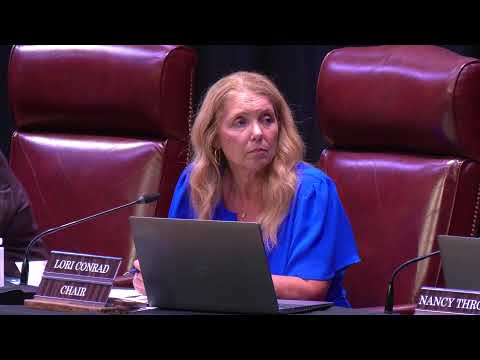
Board commentary and requests Board members praised campus hardening while expressing sensitivity to student mental health and the balance between visible security and an inviting educational environment. Several trustees asked for more detailed public breakdowns of the threat‑assessment data (low/medium/high disposition counts) because high elementary totals could be misleading without context; a Safe Schools official agreed to assemble additional detail and meet with the board soon.
Ending: Officials described safety work as ongoing and asked for continued board support for infrastructure investments and grant‑funding efforts.