Get Full Government Meeting Transcripts, Videos, & Alerts Forever!
Get email alerts on the Housing Accessory Dwelling Units topic
No spam. Unsubscribe anytime.
Alton to align accessory-dwelling rules with state law; committee to prepare comparison
Summary
The committee agreed it must bring local accessory-dwelling-unit (ADU) rules into compliance with a recent state statute that broadly allows ADUs and new definitions; staff will prepare a side-by-side comparison for the next meeting.
Committee members said the town’s accessory-dwelling-unit (ADU) rules now must be updated to conform with a recently enacted state statute that expands and clarifies ADU allowances.
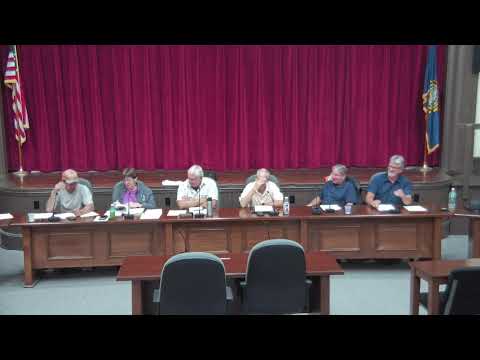
"The state has now allowed accessory dwelling units, to be detached and not, it doesn't necessarily have to be above a barn or garage," Doug Brown, current chair of the zoning amendment committee, said while introducing Amendment No. 4. Committee members noted that the statute requires towns to permit certain ADU types and to remove some prior local restrictions.
Members agreed the committee’s immediate task is compliance: staff will prepare a side-by-side comparison that highlights statutory mandates and the remaining areas where the town can exercise limited regulation, such as parking or specific siting conditions. "Maybe what we do when we take a look at that, we make sure that all of the things that the statute is mandating we do, we change our accessory dwelling unit ordinance to be fully in compliance. And then we look at those portions that we can regulate and see what we need to do," Tom Diveny, newly nominated chair, said during the discussion.
Committee discussion touched on parking and zoning-map applicability (for example, whether ADUs remain prohibited in zones where no residential use is permitted). No formal vote was taken; staff will return with a detailed comparison of local language against the state statute and suggested edits for the committee’s review.