Get Full Government Meeting Transcripts, Videos, & Alerts Forever!
Get email alerts on the Referendum Pilot Revenue topic
No spam. Unsubscribe anytime.
Moorestown voters approve two-question school referendum; board seeks town share of developer PILOT funds after accounting change
Summary
Voters approved both questions on the district referendum. The board said it will move forward with projects and is pursuing a written proposal from the township after discovering $31,000 previously identified as PILOT revenue was reclassified by the township.
Moorestown Township voters approved both questions on a special two-question school referendum held Tuesday, the Moorestown Township Board of Education reported, and the board said it will move forward with planned projects funded by the ballot measures.
The outcome also renewed a long-running conversation between the school district and township about whether the district should receive a portion of developer payments in lieu of taxes (PILOT). The board said it formally requested that the township transfer 90% of a roughly $31,000 amount it had identified as PILOT revenue; at an Aug. 25 town council meeting township officials said that sum was not PILOT revenue and that no funds were available to grant the district.
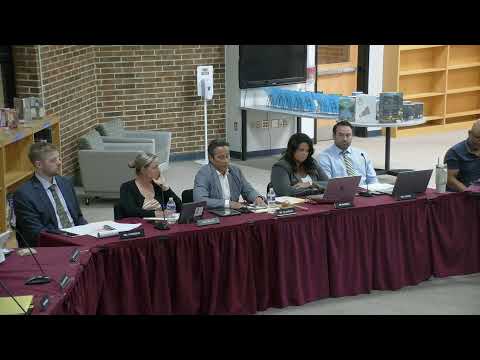
Board members framed the referendum victory as a milestone for students and the community. "My goodness. We did it. Thank you so much, everyone," Dr. McNeely, superintendent, said at the meeting. The board and district leadership said they will continue community outreach and post progress photos and updates on the district referendum page.
Why it matters: The district says recent housing developments are increasing enrollment and that a share of any PILOT revenue would help offset costs of classroom seats and services generated by new housing. Board members told the public they have discussed PILOT sharing with township officials since at least 2022 and urged a written proposal from the township so the board can evaluate a formal arrangement.
What the board said about PILOT: Board members described a multi-year exchange with township officials and financial staff. The board told the township it sought 90% of the roughly $31,000 line item shown on the township's audited financial statements; the board noted that 90% of that amount would roughly cover the district's average per-pupil cost for one student. "I requested that the board receive 90% of that revenue," Mr. Villanueva, board member, said at the meeting, summarizing the district's request.
Township response and next steps: Board members said they learned at a public township meeting on Aug. 25 that the line previously categorized as PILOT on the township's audited statements was not PILOT revenue. Township officials told the board publicly that the amount available to grant the district at this time is zero. The board said it expects a written proposal from the township describing any current or future plan to share developer-related revenue and will continue talks now that the referendum is decided.
Context and history: Board members described past conversations with a now-former interim superintendent and with township officials. They said the largest development behind the local mall is projected in township materials to generate tens of millions of dollars over the term of its PILOT arrangement and that any agreement to share a portion of developer payments would be driven by future receipts and lease/occupancy milestones that trigger payments to the township.
Public comment and security at polling sites: After the referendum some community members raised concerns about security while voting was conducted inside school buildings during the special election (voting hours were 2 p.m. to 8 p.m.). A member of the public said doors were propped open and students were present in hallways during voting. Dr. McNeely and other district leaders described multiple security measures taken at polling locations, including partitioned hallways, an on-site school security officer, and election officials stationed to direct voters. The superintendent said special elections are not typical and that the district will take community feedback into account for future vote logistics.
No final fiscal transfer: At the board meeting members emphasized that, although the board requested a share of the $31,000 line, township officials told them the amount was not PILOT revenue and that no transfer has been authorized. The board said it will continue to press for a written proposal and declined to characterize the dispute beyond stating the timeline and requesting further documentation.
What's next: With the referendum passed, the district said it will begin the projects authorized by the ballot questions and continue community outreach. Separately, the board will await the township's written proposal about developer-related revenues and said it will consider any formal agreement in a future meeting.