Get Full Government Meeting Transcripts, Videos, & Alerts Forever!
Get email alerts on the Affordable Housing Veterans topic
No spam. Unsubscribe anytime.
Rock County board approves $300,000 to cover shortfall for Edgerton veterans housing after multi-year grant dispute
Summary
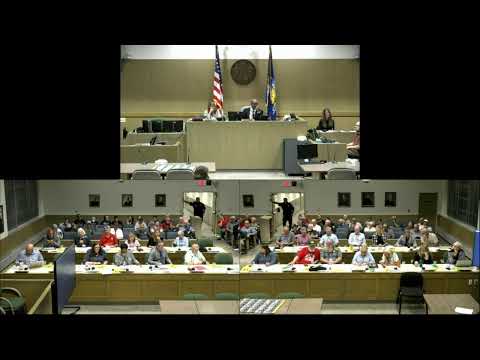
After public testimony and hours of debate, the Rock County Board of Supervisors voted 23-3 to provide $300,000 from county funds to Edgerton Community Outreach to cover a loss caused when HUD-related HOME funds could not be claimed because a contract was not signed before construction began.
The Rock County Board of Supervisors voted 23-3 on Sept. 11 to provide $300,000 in county funds to Edgerton Community Outreach to cover a funding gap for renovations at 210 West Fulton Street in Edgerton, a six-unit veterans housing project that speakers said is already occupied.
The vote followed more than an hour of public comment and board debate after Edgerton Outreach and local supporters said a procedural failure — the absence of a signed contract before construction — prevented the project from drawing down HOME program funds administered through the local HUD consortium. "The absence of a signed contract before construction began was the non starter," Sarah Williams, representing Edgerton Community Outreach, told the board, saying she had been told by a HUD official on Sept. 4 that the missing signed contract blocked access to the award.
Why it matters: The project provides six units of affordable housing for veterans, witnesses said, and local fundraising and private contributions already paid much of the cost. Supporters urged the county to "make Edgerton Outreach whole" so the nonprofit and residents do not bear the cost of administrative errors. Opponents and some supervisors argued the county was not legally obligated and raised questions about who had responsibility for the timeline and contract execution.
Public testimony and financial details: Multiple speakers described a multi-year process that ended with a county-held lien on the building and a $488,000 change order that Edgerton Outreach said pushed the project over budget. Ray Oswald, president of the Edgerton Outreach board, said outreach followed guidance from county consultants and the consortium; Buck Sweeney, an attorney representing Edgerton Outreach pro bono, said private donors and contractors had agreed to concessions but that the project still needed $300,000 to be stable. Fred Falk and Jim Hutchinson, both speaking in support, described recent local fundraising: Falk said attendees at a town-hall-style meeting pledged $9,000 that night and cited other pledges and a planned property sale to help cover costs.
Board debate and amendment attempts: Supervisor Sutherland (agenda sponsor) and others pressed the board to approve funding at tonight's meeting. Supervisor Townes argued the county's advisers bore responsibility and urged the board to act, saying, "I believe the burden is on the government experts, and that's us…" Supervisor Soderlund proposed an amendment to cut the county contribution to $150,000 and to require a loan agreement with reporting; that amendment failed on a roll call vote (4 yes, 22 no). Several supervisors said they had reviewed documents provided in advance and expressed differing views on culpability. Supervisor Gorman said he did not find the county legally or morally obligated but supported a lesser county role; Supervisor Woodman and others supported the full $300,000.
Federal role and appeal: Board discussion included statements about HUD's role. Supervisors said Edgerton Outreach met with a regional HUD official who indicated HUD does not adjudicate local distribution disputes and that local fiscal agents control disbursement decisions. Multiple supervisors and counsel explained that HOME program awards are channeled through local consortium rules and that a county-level solution would use county funds rather than federal HOME funds.
Terms and oversight: The resolution approved by the board directs county administration and corporate counsel to draft and execute an agreement for the funding. Board members insisted the contract language mirror the HOME program's affordability and reporting standards (for example, deferred 0% loans with a 20-year affordability term were discussed as a model). The adopted resolution authorizes the county to use prior-year sales tax funds to provide the $300,000 and requires an agreement spelling out terms and reporting consistent with HUD program standards.
Outcome and next steps: With the vote, the county committed $300,000; the board's action also requires administration and counsel to prepare the legal agreement and reporting terms. Multiple public speakers thanked supervisors for consideration; supporters said the building already houses veterans who would have been left without dedicated units if funding had not been found. One supervisor asked administration to report back on implementation details once the agreement is drafted.
Ending: The board approved the funding and then continued with remaining agenda items. Several supervisors urged colleagues to continue asking questions in advance of meetings when complex grants and contracts are at issue.