Get Full Government Meeting Transcripts, Videos, & Alerts Forever!
Get email alerts on the Community Development topic
No spam. Unsubscribe anytime.
Greene County holds public hearings on CDBG microenterprise program; seeks $300,000 for 2025 round
Summary
Greene County held two public hearings Sept. 17, 2025, on a closed microenterprise CDBG grant and on proposed 2025 CDBG applications. County staff said the program offers grants to microenterprises to benefit low- and moderate-income persons and expects a similar $300,000 award and roughly a dozen business awards for 2025.
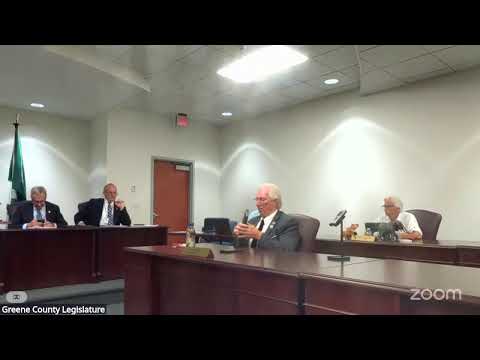
Greene County Legislature held public hearings on Sept. 17, 2025, in the county legislative chambers to review the closeout of a prior Community Development Block Grant (CDBG) microenterprise assistance award and to solicit public comment on the county’s proposed 2025 CDBG applications, including a planned microenterprise grant program for $300,000.
The hearings matter because CDBG funds are federally administered through the New York State Office of Community Renewal (OCR) and target housing, economic development, public infrastructure and planning activities whose principal purpose is to benefit low- and moderate-income persons. County staff said the microenterprise program provides grants to start-up or existing businesses with five or fewer employees and that grants can offset eligible business expenses.
James, a county staff member who presented the programs, said the prior microenterprise award (original round awarded in February 2023) has been closed out and that the county submitted closeout materials to the state. He said the county distributed the majority of the award to businesses: roughly $255,000 was awarded to approximately 12 microenterprises, with the remainder used for program delivery and administration. For the 2025 round, county staff said the county is applying for $300,000 in CDBG funds and expects to award grants up to $35,000 to eligible microenterprises. Staff estimated the program could again serve about 12 businesses and said the projects could result in the creation of roughly eight to 10 jobs or job opportunities intended to benefit low- and moderate-income persons.
Eligibility and job requirement. James said program eligibility for the HUD national objective is based on the area median income (AMI) calculation used by OCR and HUD; the county uses 80 percent of AMI as the low-to-moderate-income threshold for beneficiary tests. He explained the job-related requirement is satisfied when an applicant makes a job “available” to a low- or moderate-income person and documents advertising and recruitment efforts targeted to that population. If an applicant cannot hire a qualified low- or moderate-income person after documented recruitment, staff said the applicant may still meet the requirement by showing the position was advertised and made available in accordance with state and federal guidance. County staff characterized the positions the program is intended to create as entry-level with possible on-the-job training.
Opportunities to comment and next steps. The hearing notice and presenters invited public comments on program performance and on proposed 2025 CDBG projects. Written comments were accepted through Sept. 22, 2025, to Victoria Kaiser, the county contact for accommodations and written submissions; the notice listed a phone number (518-719-3290) and an email address for submissions. Staff said the county will use the hearing record and public input when preparing CDBG applications to OCR.
Legal framework and accessibility. The hearing record notes the public hearing was conducted pursuant to 24 C.F.R. § 570.486, subpart 1, and in compliance with the Housing and Community Development Act of 1974, as amended. The county said the hearing location is accessible and that persons needing special accommodations, including translation or hearing assistance, should contact the listed county staff at least three days before the hearing.
No formal vote on the grant applications was taken at the hearings; the sessions were for public comment and to receive information prior to any application decisions or subsequent legislative action.