Get Full Government Meeting Transcripts, Videos, & Alerts Forever!
Get email alerts on the Property Tax Reform topic
No spam. Unsubscribe anytime.
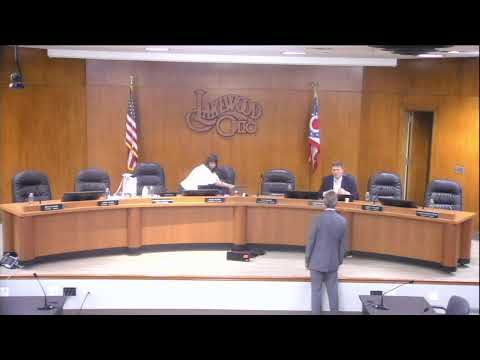
Council urges state action on property-tax relief; refers residential stability zones proposal to finance committee
Summary
Council voted Sept. 15 to refer a resolution urging the Ohio legislature to adopt tools such as residential stability zones, expanded homestead exemptions and other measures to ease rising property-tax burdens. Council members said local governments have limited options and that state policy choices over the last 15 years have shifted revenue
Lakewood City Council referred a resolution on Sept. 15 urging the state legislature to provide local governments with new tools to address rising property-tax burdens, including authorizing residential stability zones and expanding homestead-exemption and circuit-breaker options.
Councilman Bullock introduced the communication and a substitute resolution that broadened the request to emphasize the state—s primary responsibility for school funding and shared revenue. Representative Bride Rose Sweeney (state representative) and Representative Chris Glasburn joined the meeting and described state-level context: they said Ohio is heavily reliant on property taxes after reductions in state aid and rollbacks and that state action (circuit breakers, modernized homestead exemptions, and other mechanisms) is necessary to provide targeted relief.
Speakers from Cleveland Neighborhood Progress and the statewide coalition on property-tax reform urged a toolbox approach and supported permissive authority for local residential stability zones (Senate Bill 42), which would permit local governments to create targeted partial property-tax exemptions for qualifying homeowners. Several residents testified in support of local action and urged the council to press the legislature for change.
Council substituted and then referred the revised resolution to the finance committee; the substitute language adds emphasis on the state—s funding responsibilities and enumerates potential state-level tools the city supports. Council asked that finance staff prepare an explanatory briefing for the committee, including how local property-tax formulas and charter authority interact with the proposed state measures.
Ending: The resolution was referred to finance for committee review; councilmembers requested staff briefings and invited stakeholders to provide materials to the committee.