Get Full Government Meeting Transcripts, Videos, & Alerts Forever!
Witnesses: AI accelerates fraud but also helps detect deepfakes and scale defenses
Summary
Testimony at the House subcommittee hearing emphasized that artificial intelligence has multiplied scammers' capabilities — producing convincing phishing, voice cloning and deepfakes — while firms are deploying AI tools to detect fraud in real time and protect consumers.
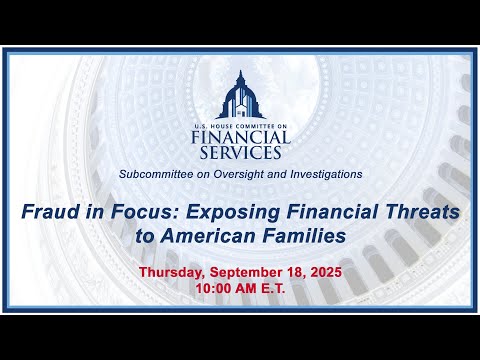
Witnesses told the House subcommittee that artificial intelligence (AI) has become a central factor in recent growth of fraud but can also be used to detect and stop scams.
Ian Bednowitz of LifeLock testified that breaches and AI are primary drivers of recent fraud increases. He said the number of Social Security numbers exposed on the dark web rose sharply and that AI is enabling…
Already have an account? Log in
Subscribe to keep reading
Unlock the rest of this article — and every article on Citizen Portal.
- Unlimited articles
- AI-powered breakdowns of topics, speakers, decisions, and budgets
- Instant alerts when your location has a new meeting
- Follow topics and more locations
- 1,000 AI Insights / month, plus AI Chat