Get Full Government Meeting Transcripts, Videos, & Alerts Forever!
Committee advances bill clarifying independent-contractor status of direct sellers and real estate agents under FLSA
Summary
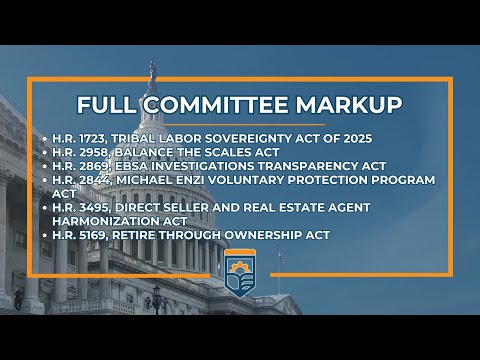
HR 3495, the Direct Seller and Real Estate Agent Harmonization Act, was reported by the House Education and Labor Committee; supporters said it aligns FLSA with long-standing tax treatment, while opponents said it carves out occupations without hearings and risks worker protections.
The House Committee on Education and Labor voted to report HR 3495, the Direct Seller and Real Estate Agent Harmonization Act, to the House after adopting an amendment in the nature of a substitute.
Representative Wahlberg (speaking as chair in the bill explanation) said the legislation would adapt the Fair Labor Standards Act’s definition of “employee” for direct sellers and qualified real estate agents to match longstanding tax-code treatment,…
Already have an account? Log in
Subscribe to keep reading
Unlock the rest of this article — and every article on Citizen Portal.
- Unlimited articles
- AI-powered breakdowns of topics, speakers, decisions, and budgets
- Instant alerts when your location has a new meeting
- Follow topics and more locations
- 1,000 AI Insights / month, plus AI Chat