Get Full Government Meeting Transcripts, Videos, & Alerts Forever!
Get email alerts on the Animal Shelter topic
No spam. Unsubscribe anytime.
Volunteers, advocates urge North Augusta to keep animal shelter local, seek state funding and a coalition
Summary
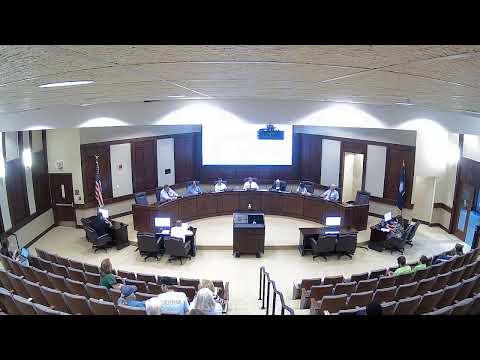
Volunteers and rescue advocates told the city at a Sept. 15 public powwow that the North Augusta animal shelter needs a modern, locally based facility and a permanent coalition of city staff, rescues and nonprofits; speakers cited high adoption work by volunteers and asked council to pursue state funding and a local plan.
Volunteers and rescue advocates told North Augusta officials at the Sept. 15 public powwow that the city needs a modern, locally based animal shelter, stronger volunteer support and a working coalition of city staff, rescues and nonprofits.
"A shelter in North Augusta is a need. It's not it's not just a want. It is a need," said Ally Jacobs, who identified herself as speaking on behalf of volunteers for FONA. Jacobs described volunteers’ work — kennel cleaning, dog enrichment, transport, fostering and social-media outreach — and said volunteers enable the shelter’s high adoption rate.
Tyler Gallis, who said he has led volunteer and advocacy efforts, urged a shift from an enforcement-first animal-control model to a community-centered facility with space for public education and youth engagement. "Imagine if the city invested in a facility that can serve the community, where families could gather and volunteer," Gallis said, listing partnerships with local groups and sporting events as examples of volunteer outreach.
Dawn Porter, who described experience with Charleston’s shelter and a low-cost spay/neuter clinic there, told council that modern shelters combine public and private funding, fundraising, licensing programs and rental or event income to cover operations. She said Charleston’s model grew over decades and cited an annual figure of 15,000 spay/neuter procedures at a comparable facility (as described from her Charleston experience).
Speakers urged the city to keep animals in North Augusta rather than moving intake to neighboring counties, to pursue state funding mentioned in a recent proposal sent by Tabitha Waldrop, and to form a standing coalition of the city, rescues and nonprofits for transparent communication and coordinated operations. The volunteer group FONA offered to continue partnering if volunteers’ contributions are respected.
Advocates named several near-term priorities: maintain and elevate veterinary-care standards, expand on-site vet partnerships, hire additional staff for evenings and weekends, adopt consistent volunteer and rescue policies, and create a formal working coalition to improve transparency and communication with animal control staff.
Council members thanked speakers and said they were listening. No formal council action on the shelter occurred at the Sept. 15 meeting; speakers asked the city to pursue funding, consider a local facility, and include rescue partners in planning.