Get Full Government Meeting Transcripts, Videos, & Alerts Forever!
Get email alerts on the City Budget 2026 topic
No spam. Unsubscribe anytime.
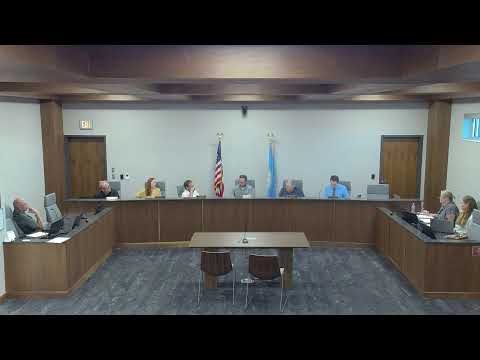
Madison staff present proposed 2026 budget with $114,000 operating gap; capital requests include substation work, rec trail, Flintfield lights
Summary
City staff told the Madison City Commission the draft 2026 operating budget has a projected $114,000 shortfall and lays out $12.5 million in capital requests, led by electric substation projects and a potential recreation-trail grant. Commissioners discussed possible cuts, wage placeholders and options for closing the gap.
City staff presented a proposed 2026 budget to the Madison City Commission that shows a projected operating shortfall of about $114,000 and roughly $12.5 million in capital requests, with large items concentrated in the electric utility and street projects. Staff and commissioners spent the meeting reviewing operating reductions, placeholders for wages and benefits, and several capital projects that would require additional funding or outside grants.
Why it matters: The budget package sets levy and spending direction for next year and would affect city services, staffing, capital projects and user rates. Commissioners were asked to weigh whether to hold nonprofit and community programs steady, reduce wages or make deeper cuts to departmental operations if revenues do not improve.
Finance staff said the city’s general cash position is strong in absolute dollars but that the operating gap remains. “Cash on hand, general cash, 9,140,000.00. Investments, 6,030,000.00, checking, 2,140,000.00, money market, 687,000, other, 283,000, restricted cash at 635,000,” Amy, a city staff member, reported during the presentation. Staff also noted one-time receipts that affect 2025 figures, including about $748,000 in FEMA grant payments and roughly $967,898 in long-term debt for a storm-sewer project.
On revenue assumptions, staff said they are budgeting a 2% increase in sales tax for 2026. Jamieson, a city staff member, summarized the revenue picture: “So we’re budgeting for a modest increase of 2% for next year.” Property tax projections reflect the levy the commission certified earlier in the meeting: $2,413,235.93, an increase of $98,825.33 from the prior year driven by a 2.9% consumer-price-index adjustment and about 1.4% new growth in taxable property.
Staff laid out a list of capital requests that, taken together, far exceed the small operating gap. Major items called out in the presentation included: - Green Substation reconstruction: $3,300,000 (design/rehab work continues) - Southeast Substation expansion and related transmission work: approximately $2,900,000 total (design and construction phases) - Underground conversion for Feeder 8 (design in 2026, construction 2027) - North Egan Avenue SRF project (year-two funding forecast of about $3.5 million) - Flintfield ball-field lighting replacement estimated at $180,000 (staff said they would seek partial matches from Dakota State University, the ball association and possible energy grant funds) - Recreation-trail extension estimated at $336,000 (staff said $200,000 could come from a grant, leaving $136,000 local match) - Restricted-use solid-waste site development (subject to permitting) and associated site-building costs
Many capital requests depend on external funding or phased scheduling. Jamieson told commissioners that roughly half of the total capital requests come from electric projects; the full package of capital requests submitted through the ClearGov portal totaled about $12.5 million. Staff noted the operating-budget gap of $114,000 does not include those capital requests and urged the commission to consider outside funding or matches for projects that advance city priorities.
Commissioners and staff discussed options to close the operating gap without immediate personnel reductions: trimming the proposed wage placeholders slightly, modest nonprofit-funding cuts and using contingency funds if needed. The commission discussed the budget’s placeholder for wages and benefits: staff had included an 8% wage placeholder for budgeting purposes and an 11% placeholder for health-insurance increases; both figures are provisional pending wage-study results and final insurance renewal numbers.
Commissioner discussion emphasized avoiding layoffs where possible. One commissioner summarized the trade-offs: cutting more capital or nonprofit support could preserve staffing, while deeper operating cuts could require personnel reductions. The commission directed staff to continue refining the budget, to firm up insurance and wage numbers before the first reading of the budget ordinance and to return with recommended tradeoffs and any available grant matches for capital items.
Staff announced public engagement and next steps: a City Circle event on the 2026 budget is set for Monday, Sept. 20, and the next regular commission meeting is scheduled for Oct. 6. Staff also said they expect to have more exact insurance and wage figures in time for the ordinance’s first reading. “By the time we get to the first reading, our intent is that we would have more exact numbers,” Jamieson said.
Ending: Commissioners did not take a final vote on the full budget at the meeting. Staff will revise line items and return with updated wage/insurance figures, recommended priority capital projects and options to close the remaining operating gap ahead of the first reading of the 2026 budget ordinance.