Get Full Government Meeting Transcripts, Videos, & Alerts Forever!
Get email alerts on the Open Meetings topic
No spam. Unsubscribe anytime.
Brookings city clerk reviews updates to South Dakota open-meeting laws
Summary
City Clerk Bonnie Foster briefed the Brookings City Council on changes tied to Senate Bill 74 and chapter 1-25 of state law, covering teleconference rules, quorum guidance, recordkeeping and executive-session exceptions.
Bonnie Foster, Brookings city clerk, told the City Council that recent changes to state law require local officials to be aware of new open-meetings definitions and procedures tied to Senate Bill 74 and chapter 1-25 of the South Dakota Codified Laws.
Foster said the changes clarify that an "official meeting" requires a quorum — defined for the council as more than half of seated members — and that teleconference communications (including email, text, social media, Zoom or other conference calls) can create the appearance of an unpublicized meeting if multiple members participate. She advised council members to use BCC on group emails to avoid accidental group discussions being visible to recipients.
The presentation emphasized three specific exceptions that are not considered a public meeting: attending a press conference, attending events hosted by other governmental or nongovernmental entities (for which the council commonly posts a notice that a quorum may be present but no action will be taken), and other narrowly defined circumstances. Foster noted that regular meeting agendas and supporting documents are public records once posted, and that staff normally handles required postings and public-access logistics.
On recording, Foster said members of the public may record regularly scheduled meetings from the audience and do not need to notify the council so long as the recording is obvious and not disruptive; meetings held in executive session are not recordable. She said first-class cities should maintain audio recordings and that video is generally optional. Foster also pointed to chapter 9 of state law as providing an additional executive-session exception for certain economic-development matters and said the city attorney will be consulted whenever the council considers going into closed session.
Foster closed by offering printed copies of an updated brochure prepared by the South Dakota Attorney General's office and said staff will keep the council informed as further clarifications or guidance become available.
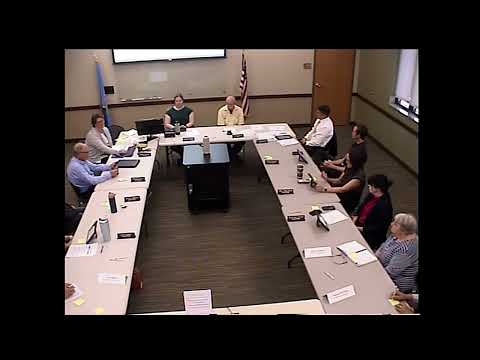
The clerk's presentation took place during the council's regular meeting; council members asked procedural questions during the presentation and thanked staff for providing the briefing.