Get Full Government Meeting Transcripts, Videos, & Alerts Forever!
Get email alerts on the Economic Development Main Street topic
No spam. Unsubscribe anytime.
Grants Pass council approves $100,000 seed grant for Main Street Grants Pass
Summary
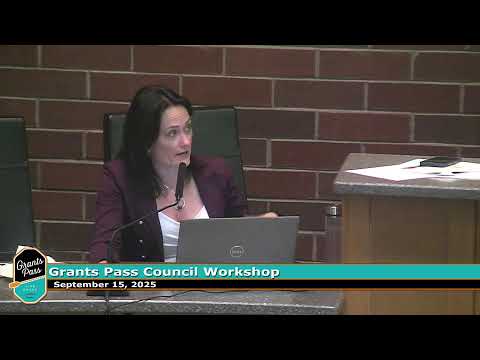
The Grants Pass City Council voted Sept. 15 to provide $100,000 in year‑one funding to Main Street Grants Pass, a newly formed downtown organization. Council left options open for years two and three, conditioned on staff-drafted performance metrics to be included in a funding agreement.
The Grants Pass City Council voted Sept. 15 to provide $100,000 in initial funding to Main Street Grants Pass, a newly formed nonprofit seeking to organize downtown merchants and boost economic activity.
The funding is the first-year portion of a three-year, $270,000 request (Year 1: $100,000; Year 2: $90,000; Year 3: $80,000). Councilor Victoria moved to provide year‑one funding and to keep options for years two and three under future consideration; Councilor Eric seconded. The motion passed on a roll call vote (Eric: yes; Rob: yes; Kathleen: yes; Indra: no; Rick: yes; Victoria: yes; Joel: yes).
Main Street Grants Pass formed after a city-commissioned downtown road map and subsequent local organizing. City economic development staff presented the request and proposed funding sources for year one: $40,000 from the city’s sale-of-surplus-lands fund (LB fund), $40,000 from the industrial and downtown loan fund, and $20,000 from the general fund economic development allocation. The group has also received a separate Oregon Main Street revitalization grant of $400,000 for a renovation project at 221 Southeast Sixth Street.
Dana Pierce, economic development division, told council the Main Street steering committee evolved into a formal board in early 2025 and proposed an initial operating budget that allocates about 55–60% of annual funding to personnel (an executive director and a program coordinator). "Staff does recommend establishing performance metrics to be achieved at the end of year 1," Pierce said; examples discussed included hiring an executive director before release of year‑two funding and membership-count minimums.
Main Street Vice Chair Michael Okoyne described early organizing and fundraising plans and said the request is intended to give the volunteer-led group breathing room to hire staff and deliver programming that will attract members. Okoyne and other board members said the organization is still forming committees and fundraising capacity. "We don't have them of all memberships right now," Okoyne said of the membership targets; the board proposed membership goals of roughly 110 members in year 1, 127 in year 2 and 145 in year 3.
Council discussion ranged from support for a downtown organization to concerns about the group's communications and capacity. Councilors pressed staff and Main Street representatives on how the request would be used, what performance measures would be required and which city funds were appropriate. Councilor Rob said he has received complaints from merchants about a lack of follow‑up from the Main Street effort. Okoyne responded that the organization is composed of volunteers and that some emails may have been missed, saying they would investigate any addresses that did not receive outreach.
Council amended the direction so that year two and three funding would remain an option but be tied to defined performance metrics to be written into a formal funding agreement. Staff was directed to draft an agreement that would include contingencies and to return those proposed metrics for council review. After the vote Pierce confirmed staff had the direction to draft the funding agreement and to bring proposed metrics back to the council.
The council debate also touched on potential funding sources and limitations: staff and counsel discussed why some lodging-tax (transient lodging tax) dollars were not proposed for the Main Street operating ask because those dollars are restricted by statute for certain promotional activities. Councilors and staff agreed to return with any additional clarifications about downtown services budgets or other funding options if requested.
What’s next: staff will draft a funding agreement that includes the year‑one payment and proposed performance metrics the council requested for consideration before any year‑two or year‑three disbursements. The group may also continue to pursue private fundraising and grant opportunities to reduce future city support.