Get Full Government Meeting Transcripts, Videos, & Alerts Forever!
Get email alerts on the Telecom Rights Of Way topic
No spam. Unsubscribe anytime.
Council enacts updated right‑of‑way rules and fees for small‑cell wireless; industry voices concerns about definitions and fee methodology
Summary
After public testimony from wireless carriers and infrastructure providers, Lake Oswego council adopted two ordinances updating utility and small‑cell rules in the public right‑of‑way and a resolution that sets related fees; council approved the measures 7–0.
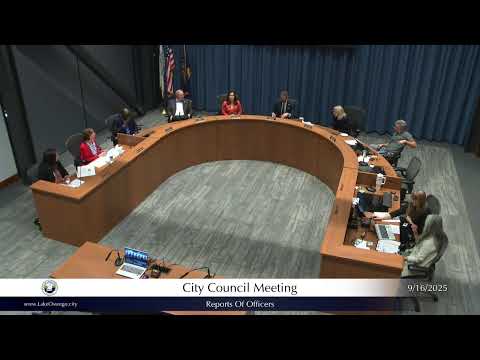
The Lake Oswego City Council on Sept. 16 enacted two ordinances and adopted a resolution that update the city’s code and fee structure for utilities and wireless communications in the public right of way.
What passed - Ordinance 29‑31: Amends Chapter 51 to standardize terms for utility rights‑of‑way use and to require licensees to report use and subleasing of facilities. - Ordinance 29‑65: Replaces an earlier ordinance (28‑20) and updates regulations specific to small wireless facilities to align with state and federal law and the city’s design standards. - Resolution 24‑29: Revises fee methodology to separate fees charged to owners/operators of facilities in the right of way from fees charged to wireless service providers that use facilities but do not own them; the city set a cost‑based fee for facility owners and a modest annual registration fee ($400) for service providers not owning right‑of‑way facilities.
Public testimony and industry concerns Representatives for wireless carriers and an infrastructure owner (Crown Castle) testified in a continuation of a March hearing. Industry witnesses commended staff for engagement but raised several substantive objections: - Whether entities that do not own facilities in the right of way (for example, carriers that lease fiber delivered through the right of way to private‑property macro sites) should be treated as users or be assessed a right‑of‑way charge; carriers argued the new approach could subject companies that do not place facilities in the right of way to fees. - Whether the city’s fee calculations (including a $627.47 per‑site cost‑based fee for wireless facility operators shown in staff materials) meet the federal cost‑based standard for small cell fees and whether the $400 annual registration for non‑facility providers is lawful. - Volumetric and size limits for small‑cell hardware; infrastructure providers asked for flexibility on the cubic‑foot limits the draft ordinance uses for equipment size.
City response and vote City staff told the council the package is intended to align city regulation with FCC requirements while preserving local design standards and clarifying fee responsibilities. The staff presentation said the city adjusted the earlier gross‑revenue proposal to a modest annual fee for service providers and a cost‑recovery model for owners of facilities in the right of way.
After questions from councilors, including concern about coverage gaps and a request that staff continue to work with industry on deployment details, the council adopted the two ordinances and the fee resolution unanimously, 7–0. Council asked staff to continue dialogue with wireless providers and to look for opportunities to encourage investment and address local coverage gaps.
Next steps Staff will publish the updated code and fee schedule; the council asked staff and counsel to monitor legal challenges and to maintain conversations with carriers to address coverage issues raised during testimony.