Get Full Government Meeting Transcripts, Videos, & Alerts Forever!
Get email alerts on the Land Use Environment topic
No spam. Unsubscribe anytime.
Neighbors and planning board challenge Highland Ridge Farm concept; DEM says granite removal is not agricultural
Summary
Planning board members and neighbors pressed Tom Chase on Sept. 9 for detailed engineering, rock-volume and soil-reserve calculations after he proposed converting Highland Ridge Farm — a large, formerly quarried property — to agricultural fields.
Tom Chase sought feedback from the Tiverton Planning Board Sept. 9 on a concept to convert a large property known as Highland Ridge Farm into active farmland. The proposal would include removing granite and redistributing on-site soils to create new fields; Mr. Chase described phased work and haying to condition soils before planting.
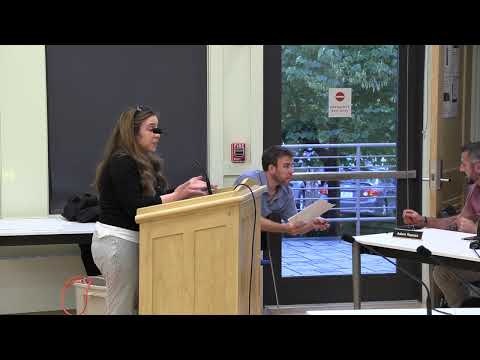
Board members and neighbors pressed for specifics. Planning board members asked for quantification of how much rock would be removed, how much topsoil would be available and how long the earth-moving and rock-cutting would take. Board members and several residents raised safety, blasting and erosion concerns given steep topography and high contour differentials on parts of the lot.
Several neighbors and former opponents of the owner’s prior quarrying activities described past impacts from dust, noise and truck traffic. Councilor Deb Janick and multiple neighbors said the neighborhood had previously experienced prolonged disturbance tied to past quarry operations. Neighbors asked for protections if heavy excavation or cutting were to proceed so close to existing properties.
The board also received and discussed an advisory note from the Rhode Island Department of Environmental Management. A DEM official wrote (as summarized in staff notes) that while the division of agriculture supports bona fide farm creation, removal of granite is not an agricultural operation and DEM treated previous permitting submittals as surface-mining activity; DEM returned earlier permits as deficient and did not process them further. In short, DEM said granite removal to create fields is not an agricultural activity and would be evaluated as a surface-mining/quarry operation under state rules.
Planning board members said the information DEM provided and the contour mapping in the applicant’s materials showed the scope of earth-moving and rock removal would be substantial and called for more detailed engineering analyses: estimates of rock volume, grading plans, a realistic schedule, demonstration of how topsoil would be conserved or imported, and studies of impacts to neighboring foundations, hydrology and roadways.
The board concluded the concept presentation raised substantial technical, safety, and permitting questions and asked the applicant to return with more detailed engineering data, rock and soil volume calculations, and plans for erosion control and staging. Several board members suggested an independent engineering review would be required before the board could consider formal applications. No board vote on the concept was required; the board provided feedback and requested further materials.
Public comment: Several neighbors urged the board to treat the project as quarrying rather than a straightforward farm conversion and highlighted ongoing litigation and prior neighborhood impacts. One neighbor asked the board to consider conservation easement options instead. The board scheduled no follow-up hearing at that meeting but requested the applicant provide the requested technical documentation to enable a fact-based review.