Get Full Government Meeting Transcripts, Videos, & Alerts Forever!
Get email alerts on the Liquor Regulation topic
No spam. Unsubscribe anytime.
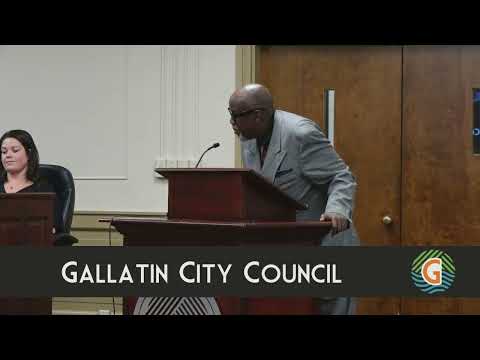
Gallatin council postpones ordinance to remove distance rule between retail liquor stores after hours of public comment
Summary
After hours of public comment for and against shrinking or removing the city’s one‑mile spacing requirement between retail liquor stores, the council moved to postpone action indefinitely on the amendment to Section 3‑55 of the Gallatin code.
The Gallatin City Council on Sept. 16 considered a proposed ordinance to amend section 3‑55 of the Gallatin Municipal Code to delete the distance requirement between existing and approved retail liquor stores. The ordinance was the subject of extended public testimony and council discussion; ultimately the measure was postponed indefinitely.
Councilman Alexander moved to defer consideration to a future work session to allow more study; that motion was later withdrawn and a motion to postpone the ordinance indefinitely was made and seconded. The council voted to postpone the ordinance indefinitely.
Public comment at length divided along neighborhood and business lines. Dozens of residents — including Margaret Tyson of Saint Luke AME Church and Sean Cook, senior pastor of Key Stewart Church — urged the council to retain the one‑mile spacing requirement and argued reducing it would concentrate alcohol outlets near schools, churches and neighborhoods. “Moving liquor stores closer to our schools and churches sends the wrong message to the next generation,” pastor Sean Cook said, adding, “If we must consider distance requirements, then let us strengthen them, not weaken them.”
Others, including several retail business owners and a former Tennessee Alcoholic Beverage Commission executive, urged a reduced spacing or a population‑based approach. Tom Weeks (Danielle Elks in transcript is the alcohol attorney) and other speakers said many Tennessee cities use shorter distances (e.g., 600 feet), and attorney Danielle Elks told the council that “a mile is probably the highest that I’ve seen across the state” and that a reduction could generate city tax revenue. Several commenters said the city’s earlier change two years ago — which lifted a cap on the number of licenses — had not yet shown its full effect and urged caution.
Council debate ranged from regulatory complexity to fairness for existing license holders. Some council members said they had learned more about the regulatory framework and state tax rules since earlier action and expressed concern about singling out a single applicant or parcel. Councilman Fan, who has experience selling alcohol in the community, argued for tying availability to population and demographic factors, noting on‑street drinking and transit concerns in areas lacking vehicle access.
After discussion, Councilman Chuvance moved to postpone the ordinance indefinitely; Councilman Alexander seconded. The council approved the motion and took no further action on the ordinance that evening.
What changed: The council had earlier amended the proposed ordinance during prior meetings; at this session members expressed a desire for more study and warned that a piecemeal change tied to a single applicant could create legal or political problems. The Planning Department and city staff will be expected to provide analysis if the council takes the matter up again.