Get AI Briefings, Transcripts & Alerts on Local & National Government Meetings — Forever.
Committee hears testimony to extend county Medicaid maintenance-of-effort sunset to 2030
Loading...
Summary
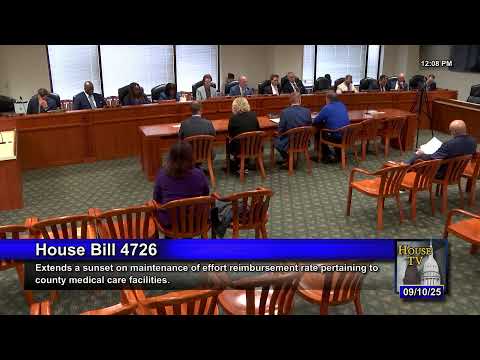
The Michigan House Health Insurance Committee heard testimony on House Bill 47 26, a measure to extend the sunset date for the county maintenance-of-effort (MOE) formula that governs Medicaid reimbursement for long‑term services in county‑owned medical care facilities from Dec. 31, 2025, to Dec. 31, 2030.
The Michigan House Health Insurance Committee heard testimony on House Bill 47 26, a measure to extend the sunset date for the county maintenance-of-effort (MOE) formula that governs Medicaid reimbursement for long‑term services in county‑owned medical care facilities from Dec. 31, 2025, to Dec. 31, 2030.
Supporters told the committee the MOE formula provides predictable funding that helps county facilities care for higher‑acuity residents. “This bill is a straightforward but important measure that would extend the sunset on the current county maintenance of effort formula for Medicaid funded long term services in county owned medical care facilities from 12/31/2025 to 12/31/2030,” said the bill sponsor during testimony. The sponsor said the change “does not change the underlying formula or create new obligations. It simply continues a system that has stood the test of time.”
Renee Beniak, executive director of the Michigan County Medical Care Facilities Council, which represents the 34 county‑owned nursing homes across Michigan’s 83 counties, told the committee the facilities serve as a safety‑net provider. “We serve as a safety net provider for Michigan’s most vulnerable citizens who need nursing home care regardless of their ability to pay,” Beniak said. She told members the county facilities “serve on a statewide average between 10% and 15% more Medicaid than the average for‑profit or nonprofit nursing home in Michigan,” and said the MOE has allowed county facilities to receive higher Medicaid reimbursement, admit higher‑acuity residents and maintain staffing and mission-driven services.
Don Heaney, a former administrator at Thornapple Manor in Barry County, described the program’s long history and said stability is a priority. “This program has been in place since the eighties,” Heaney said, adding that renewed long‑term certainty would help county medical care facilities “put more staff on the floor” and maintain quality care for vulnerable seniors.
Committee members did not take a bill vote during the hearing. The committee approved routine business earlier in the meeting, including the minutes from the Sept. 3 meeting by unanimous voice approval and a motion to excuse absent members, also approved without objection. Several organizations submitted testimony cards in support of the bill, including representatives from the Michigan County Medical Care Facilities Council and LeadingAge of Michigan.
Supporters asked the committee to advance House Bill 47 26 to preserve continuity and budgeting certainty for county‑operated nursing homes; no amendments or fiscal details beyond the extension were discussed on the record during the hearing. The testimony on the bill concluded and the committee adjourned later in the session.