Get Full Government Meeting Transcripts, Videos, & Alerts Forever!
Get email alerts on the Protest Law Vehicle Code topic
No spam. Unsubscribe anytime.
House debate over criminal penalties for blocking roadways leads to temporary passage motion
Summary
After extended floor debate over House Bill 4664, which would change penalties for locking roadways, the House moved to pass the bill temporarily; debate centered on First Amendment concerns and public-safety arguments including potential fines and jail time.
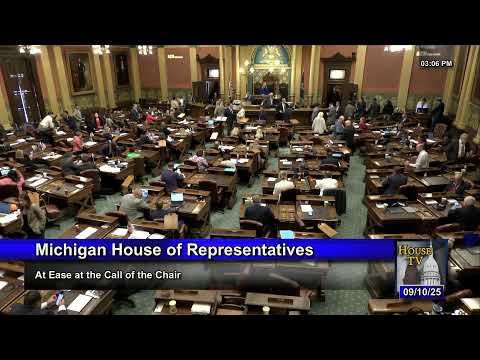
Lansing — Lawmakers engaged in an extended debate Sept. 10 over House Bill 4664, which would amend the Michigan Vehicle Code to increase penalties for locking or blocking roadways; the House later moved to pass the bill temporarily.
Representative Hope, speaking in strong opposition, said the bill “takes what is now a civil infraction, locking a roadway, and raises it to the level of a criminal offense carrying jail time and fines up to $5,000.” Hope argued the change could chill constitutionally protected protest activity, saying the legislation “would have a chilling effect on lawful protests by making people fear arrest for exercising a constitutional right.” Hope cited historical examples of protest and warned the bill was “poorly drafted” and could enable selective enforcement.
Representative Saint Germain, who presented the bill on the floor, said the measure is aimed at public safety and preventing disruptions that can delay emergency services and everyday travel. Saint Germain noted recent instances where major thoroughfares were blocked and said such disruptions “can be the difference between life and death,” arguing the bill protects motorists, emergency responders and the general public.
Floor debate referenced constitutional concerns and civil liberties as well as public-safety consequences and examples from multiple Michigan municipalities. The American Civil Liberties Union (ACLU) was cited in debate as noting on its website that blocking a road is illegal and may lead to arrest; proponents said the bill would deter hazardous behavior, while opponents said it risks criminalizing protest.
After extended discussion, the majority floor leader moved to “pass temporarily”; the motion was ordered without objection. The move to pass temporarily is a procedural action recorded on the floor and does not constitute final passage; the clerk closed the board and no final roll-call tally for third reading passage was announced in the debate segment.
The House did not specify on the record an implementing penalty schedule beyond the references in debate, and no statutory text was read into the record beyond the bill title during the third-reading sequence captured here. Next steps for HB 4664 depend on the chamber’s scheduling and any committee or floor procedures that follow the temporary passage motion.