Get Full Government Meeting Transcripts, Videos, & Alerts Forever!
Get email alerts on the Foster Benefits Preservation topic
No spam. Unsubscribe anytime.
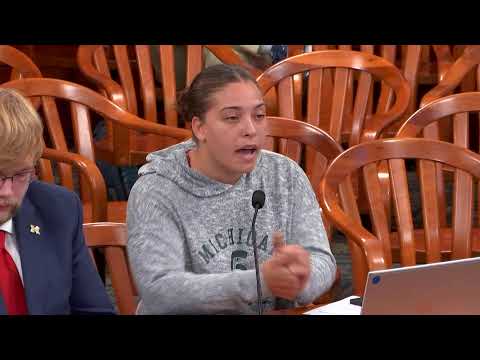
Former foster youth, advocates press Michigan lawmakers to stop states from seizing youths’ Social Security benefits
Summary
Former foster youth and advocates told the House subcommittee that survivor and disability benefits paid to children following a parent’s death or disability are sometimes diverted from the child to state accounts; witnesses urged statutory changes to preserve those funds for the child’s future.
Former foster youth and advocates told the House Oversight Subcommittee on Child Welfare System that Social Security and other benefit payments intended for children are in many cases received by state or third‑party payees and not preserved for the child.
Justin Couschetta, a Michigan native who testified in person, said he lost roughly $18,000 in Social Security survivor benefits after his father’s death when he and his siblings entered foster care. “About $18,000 in total was taken from just me,” Couschetta said. He told the committee that representative‑payee rules under the Social Security Administration allow a payee to receive funds on a child’s behalf, and in Michigan those funds have at times been used to reimburse state foster care costs or absorbed into state accounts.
Couschetta and other witnesses said the practice is not universal nationwide and that several states have acted recently to preserve such funds for children. He said House and Senate bills have been introduced in Michigan (he referenced “House Bill 47 50” and “Senate Bill 18” during testimony) to deposit funds into accounts the child can access later — such as an individual development account or trust managed until the child reaches an age for independent access.
Saba Gabri and foster youth witnesses told the committee that when payees other than the child receive the benefits, it can create confusion and abuse; one witness said roughly 600 young people in Michigan account for about $3.5 million in diverted benefit funds. Witnesses proposed several administrative and legislative fixes, including: - Creating a custodial account or trust (an individual development account) that holds a child’s SSA or veteran benefits until the child is old enough to access them or until narrowly specified needs arise. - Clearer state guidance on appointment of representative payees and who may serve in that role. - Options for an independent custodian or professional trustee rather than automatic transfer to state general funds.
Why it matters: Witnesses linked preservation of these funds to improved outcomes for youth aging out of care, arguing that access to money for education, housing deposits or other transition needs can reduce homelessness and long‑term public costs. Couschetta noted bipartisan interest in the issue and said his proposals have gained attention from multiple national policy voices.
Committee response and next steps Committee members asked about who currently serves as representative payee and where funds go; witnesses said the payee can be the state or a local court/municipality, and that practices have varied. Members asked advocates to provide draft language and implementation options; advocates said they were working with Representative Schmaltz and Senator Irwin on measures to preserve funds for children.
Ending Members thanked the witnesses and asked staff to follow up with the advocates and MDHHS for additional detail. No committee vote on statutory change occurred at the hearing.