Get Full Government Meeting Transcripts, Videos, & Alerts Forever!
Get email alerts on the Child Protection Reform topic
No spam. Unsubscribe anytime.
Detroit nonprofit urges Michigan lawmakers to require trauma training, safety plans and independent abuse investigations
Summary
Neighborhood Service Organization and partners presented a three-part legislative package — mandatory age‑specific trauma training, safety‑plan mandates and independent investigations — aimed at reducing abuse and gaps in Michigan’s child welfare responses.
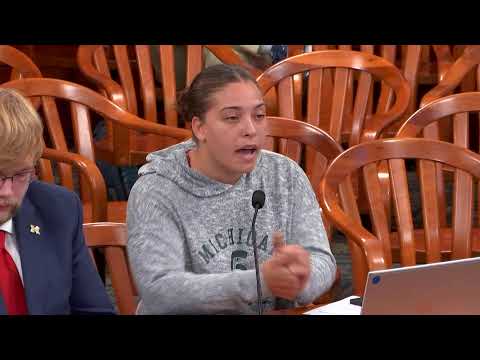
Neighborhood Service Organization President Linda Little told the House Oversight Subcommittee on Child Welfare System that her organization’s “Don’t Touch Me” awareness campaign seeks three legal changes to better protect children reported as abused. Little, joined by Mikael Muhammad of Reclaiming Our Community, asked lawmakers for mandatory, age‑specific trauma training; a requirement that safety plans accompany returns of children to homes where abuse allegations exist; and independent investigations by each agency that interacts with child abuse reports.
The proposals, Little said, are “based on the countless women who have told their stories about what’s happened to them in this system,” and she urged lawmakers to prioritize children’s safety. “Our mission with this movement is to ensure that every child has a right to be safe, to be heard, and to be free from harm,” she said.
Why it matters: Witnesses told the panel that training gaps and institutional overlap create situations where evidence and disclosures are missed or downplayed, and that those failures can have fatal consequences. Little cited recent high‑profile cases in Michigan and said survey research conducted by Epic MRA in June found 600 Michigan respondents and 92 percent support for reforms like the ones she described.
Details of the proposals and testimony - Mandatory, age‑specific trauma training: Little said professionals across the child welfare continuum — Child Protective Services workers, law enforcement, judges and guardians ad litem — often lack training on how children exhibit and disclose trauma. She told the committee several professionals had “admitted that they had not been trained on child abuse.” - Safety plans at return: Little recommended a mandated safety plan when a child is returned to a home after an unsubstantiated or partially substantiated investigation; those plans could include regular check‑ins, education and family‑reunification strategies intended to protect the child. - Independent investigations: Little argued that relying on a single agency’s view (for example, CPS relying on law enforcement findings) creates gaps. “Each independent and distinct entity should conduct their own investigations and come to their own conclusions based on the evidence of fact,” she said.
Committee members asked for examples and implementation details. Representative Regas and others pressed whether parts of the three‑part package exist in other states; Little said some states have pieces in law, such as mandatory training for certain mandated reporters and certification requirements for guardians ad litem. Committee members asked Little and Muhammad to provide examples and state statutes they had reviewed.
What the testimony did not assert The witnesses requested legislation but the committee did not vote on any bill during the hearing and no draft text was presented in committee that would enact the three proposals. Witnesses described practices they said were common in some cases, but they did not assert that a particular statewide policy currently exists in Michigan requiring the exact package they proposed.
Next steps and context Little offered to provide the committee with research and written materials on states that have adopted similar measures. Committee members said they would read the handouts and consider how the ideas might be translated into policy or procedural changes.
Ending Committee members thanked the witnesses and said staff would follow up; no formal legislative action was taken at the hearing.