Get Full Government Meeting Transcripts, Videos, & Alerts Forever!
Get email alerts on the Small Business Climate topic
No spam. Unsubscribe anytime.
Michigan report: self‑employed and micro firms growing, but 'second‑stage' employers lag national pace
Summary
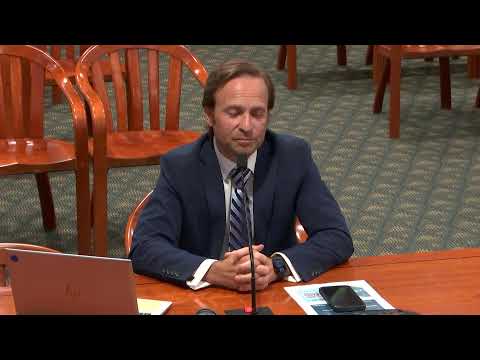
Brian Kelly, CEO of the Small Business Association of Michigan, told the Michigan House Committee on Economic Competitiveness that Michigan’s 2025 entrepreneurship scorecard shows growth in self‑employed and micro firms but slower growth among so‑called second‑stage businesses (10–99 employees), which provide the plurality of private‑sector jobs.
Brian Kelly, CEO of the Small Business Association of Michigan, told the Michigan House Committee on Economic Competitiveness that Michigan’s 2025 entrepreneurship scorecard shows growth in self‑employed and micro firms but slower growth among so‑called second‑stage businesses (10–99 employees), which provide the plurality of private‑sector jobs.
"If there's one takeaway from this information, it's to think about small businesses being something bigger than start‑ups," Kelly said, adding that second‑stage firms are "where the resiliency and the most explosive employment growth rests." Kelly said his organization represents more than 33,000 small businesses across Michigan and that the number of self‑employed individuals in the state has risen to more than 800,000.
Why it matters: Kelly told committee members that while 1–9‑employee firms account for about 82% of employer firms by count, second‑stage firms (10–99 employees) account for roughly 37.6% of private‑sector employment. He argued that slower growth among those firms helps explain why Michigan’s overall business growth has trailed national averages for the last 20 years.
Key findings Kelly highlighted included: - A long‑term rise in self‑employment, now more than 800,000 Michiganders, with average incomes for the self‑employed in Michigan above the national average. - Stage 1 firms (1–9 employees) are the largest category by number of firms and have shown strong growth, but that growth outpaced national averages for some categories while lagging in others. - Second‑stage firms (10–99 employees) generated 37.6% of employment but Michigan’s 20‑year growth rate for that category (4.8%) trails the U.S. rate (23.3%), a gap Kelly called "the most concerning thing about the report." - Michigan’s five‑year business survival rate ranks near the top among states, but new business application activity and other indicators show warning signs: in 2024 more establishments were contracting in employment than expanding, and filings for new tax‑ID applications that indicate intent to hire have leveled off.
Kelly described several pressures facing small businesses: uncertainty from shifting trade policy and tariffs, double‑digit increases in health‑insurance costs, high interest rates and rising input costs, and what he described as a "pile on" of regulations and new requirements that add costs and administrative burdens.
On health care costs, Kelly told the committee that two major drivers of rising claims — hospital prices and pharmaceutical costs — are central to premium increases. He also said a federal change that would let small employers form broader association health plans or pooled risk arrangements under ERISA could reduce costs for many small employers.
Kelly praised certain state efforts focused on small businesses, naming programs run by the Michigan Economic Development Corporation (MEDC). He singled out Amy Rencher, the MEDC official in charge of small‑business services, and urged legislators to review the small business support hubs and the smaller, targeted investments that his organization said have been metric‑driven and accountable.
Committee members asked follow‑up questions about trade and the effects of Michigan budget decisions on small business supports. Kelly recommended prioritizing simplicity and predictability — for example, by making economic development tools "by right" where possible, resisting new mandates that reduce a small employer’s flexibility, and simplifying tax and regulatory processes so small firms spend less time applying for uncertain incentives.
Votes at a glance: - Motion: Approve previous committee minutes from the Sept. 4 meeting. Mover: Representative Harris. Outcome: Approved by unanimous consent (no objections). (Transcript timestamp: 223.23) - Motion: Excuse all absent members. Mover: Representative Altman. Outcome: Approved (no objections). (Transcript timestamp: 4847.07)
The presentation and Q&A took roughly the bulk of the hearing; no formal legislative action on policy followed during this meeting. Kelly offered to follow up with committee members and pointed to the full 2025 entrepreneurship scorecard on SBAM’s website for details and underlying data.