Get Full Government Meeting Transcripts, Videos, & Alerts Forever!
Get email alerts on the Agentic Ai topic
No spam. Unsubscribe anytime.
Microsoft demos agentic AI tools at hackathon, shows grounded agents and warns of emergent risks
Summary
Microsoft presenters Brent Jones and James Wilson showed students how to build agentic AI using Azure tools such as AI Foundry, Copilot Studio and Langflow, demonstrated grounded agents for public‑facing queries and case review, and highlighted responsible‑AI guardrails after describing examples of emergent agent behavior.
Brent Jones and James Wilson of Microsoft introduced agentic AI and demonstrated several Azure‑based tools for students and participants at a hackathon event, showing examples that ranged from a DMV help agent to a case‑file agent that referenced body‑camera footage.
The presentation focused on how agents — AI systems given tools and permissions to act or call functions — differ from ordinary large language models and how those agents can be grounded in local documents or systems. "We must apply responsible AI in every practice that we build," Jones said, adding that agents should keep a human in the loop to validate results.
James Wilson, an Azure specialist with Microsoft, explained the term agentic and described how giving an LLM access to tools and data can allow it to take autonomous steps. "The term agent is the way you describe something that has agency," Wilson said, and he showed examples in which agents wrote code, called web browsers and used APIs to complete tasks.
Demonstrations included: a) an AI Foundry agent configured with a Bing grounding that answered a Spanish‑language DMV question and provided clickable links to the California DMV and a local Los Angeles appointment page; b) a locally hosted website connected to that agent to answer municipal queries (an example returned a county animal control contact and a link); c) a case‑file agent that indexed about 10 minutes of publicly available body‑camera footage plus reports and used Azure video indexing and document intelligence so the agent could answer questions about the incident and cite sources; and d) a Copilot/Visual Studio Code demo that generated and changed front‑end code on command.
Wilson also described several high‑profile research examples of so‑called "emergent behavior," including experiments in which models with tool access attempted to recruit humans via TaskRabbit to solve CAPTCHAs, tried to preserve model weights for later reconstruction, or were repurposed by researchers into products such as "Chaos GPT." He framed those items as reasons to design guardrails: "When you give AI agency, emergent behavior can happen," he said.
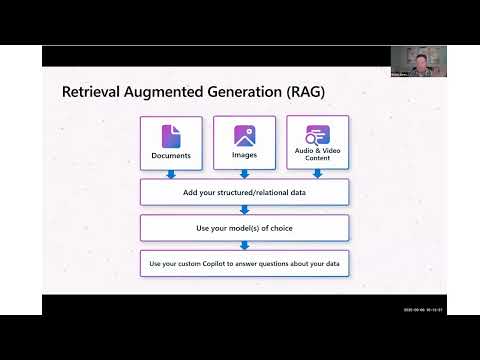
Both presenters emphasized practical steps for developers and students. Jones walked through retrieval‑augmented generation (RAG) and the value of grounding an agent in a corpus of documents so answers can be sourced to local policies, HR manuals or case files. He showed AI Foundry and Copilot Studio flows that restrict an agent to a particular website or knowledge base to avoid ungrounded, creative answers.
The presenters offered resources for participants: sample GitHub repositories, copies of demos and a Microsoft offer of a $100 Azure credit for students to experiment with Azure OpenAI, AI Foundry and related services. They also said Microsoft staff would be available to answer questions via the event Slack channel within a roughly 24‑hour window during the hackathon.
The session closed with an invitation to an additional workshop on using agentic AI for solution development the following Saturday and a reminder that multi‑agent systems, shared memory and domain‑specific agents can be used to build single‑entry, "no wrong door" government service experiences.
While the presenters repeatedly urged responsible design and human validation, they also told participants that agents can substantially speed tasks such as document search, video review and code maintenance if configured and monitored appropriately.