Lifetime Citizen Portal Access — AI Briefings, Alerts & Unlimited Follows
Glendale staff present 2026 Building and Fire Code package; no new residential amendments proposed
Loading...
Summary
City of Glendale staff on Sept. 17 presented a draft of the 2026 Glendale Building and Safety Code to the Building and Fire Board of Appeals and said they will ask the board to recommend adoption to City Council in October.
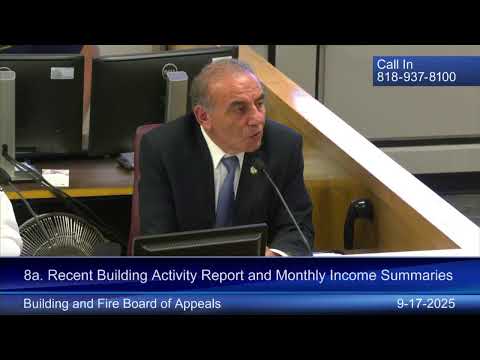
City of Glendale staff on Sept. 17 presented a draft of the 2026 Glendale Building and Safety Code to the Building and Fire Board of Appeals and said they will ask the board to recommend adoption to City Council in October. Ara Sarkson, Glendale building official, told the board the package carries forward most local amendments from the prior cycle and that "we are presenting today to the board, proposed amendments to 2026 City of Glendale Building and Safety Code."
The presentation focused on process and timing: staff said state law and recent legislation constrain local changes to residential building standards this cycle, and therefore Glendale is proposing only limited clarifications to the fire code and administrative provisions rather than new residential amendments. Staff asked the board to review the draft at a second meeting on Oct. 15 and said the ordinance will be introduced to City Council on Oct. 28 and scheduled for adoption on Nov. 4; staff noted the ordinances are being timed so the local amendments would become effective on Jan. 1, 2026, the date the state Title 24 update takes effect.
Why it matters: Title 24 (the California Building Standards Code) sets statewide minimums for building, residential, plumbing, mechanical, electrical and fire safety standards. Local jurisdictions may adopt amendments in some areas, but state statutes and recent legislation can limit when and how those amendments may be made. The boards review is an early step in Glendales statutory adoption timeline that determines what rules builders and plan check applicants must follow starting Jan. 1, 2026.
Staff emphasized there are no proposed substantive local changes to the residential volumes (Volume 1B) this cycle because of the states restrictions on residential amendments; Ara Sarkson told commissioners the city worked with the California Building Standards Commission and regional partners while preparing the packet and that most of Glendales existing local amendments are being carried forward. Building Code Specialist Chris Agus reviewed the nine-volume package that comprises Glendales 2026 Building Safety Code and reiterated that many administrative and technical amendments mirror the previous (2023) local code, adjusted to the 2024 International Code Council model codes adopted in Title 24.
Gabriel Riza of the Fire Prevention Bureau summarized the proposed fire-code clarifications staff seeks to retain or modify. He said the department reviewed the 2024 International Fire Code and that the changes Glendale plans to keep or clarify include: maintaining emergency responder radio coverage requirements (Section 503), keeping local provisions addressing decorative vegetation discovered during inspections, continuing a localized sprinkler-notification requirement that replaces a simple bell with a weatherproof horn-strobe in dense areas, requiring fire-escape structures located outside buildings to be certified by a licensed design professional, and moving the previous Chapter 49 (wildland-urban interface) into a separate wildland-urban-interface code with related administrative provisions to match state structure. Riza described the removal of Chapter 49 from the base fire code as "the most significant change," and said much of the citys prior Chapter 49 language will live in the new, separate volume to reflect defensible-space and inspection rules unique to Glendale.
Staff also summarized administrative logistics: plan-check applications submitted on or after Jan. 1, 2026 must be designed under the new Title 24 editions; Glendale intends to time its local ordinances so the local amendments become effective the same day. The presentation referenced Health and Safety Code sections staff used to guide amendments and timelines and noted the city engaged its plan reviewers and fire staff in the review process.
No formal action was taken on the code package at the Sept. 17 meeting. The board did approve minutes from a prior meeting by voice vote after a motion by Commissioner Kanyon and a second; the minutes approval and the meeting adjournment were recorded as approved by voice, but no roll-call tallies were recorded for those procedural items.
Next steps: staff will bring any board recommendations to a second board meeting on Oct. 15; if the board concurs staff will present final package materials to City Council (introduction Oct. 28, adoption Nov. 4) so the local ordinance amendments can be effective Jan. 1, 2026. The city also advised applicants that code books and training are available through the International Code Council and related state and regional organizations.
Staff and presenters at the meeting included Building Official Ara Sarkson; Building Code Specialist Chris Agus; Principal Building Code Specialist Connan Lung; Fire Prevention Bureau representatives Cita Partania and Gabriel Riza; and other building- and fire-department staff who assisted in preparing the amendments. Commissioners present included Commissioner Achillan, Commissioner Badmagharian, Commissioner Hannessian, Commissioner Onkeiko and Commissioner Kanyon.