Get Full Government Meeting Transcripts, Videos, & Alerts Forever!
Get email alerts on the Emergency Management topic
No spam. Unsubscribe anytime.
Council reviews updated Emergency Operations Plan; asks staff for condensed mission statement and clarifications of elected roles
Summary
Staff presented an updated Emergency Operations Plan (EOP) aligned with FEMA, Cal OES, SEMS and NIMS. Council asked for a concise mission summary, clearer language on the role of the mayor and council in emergencies, and hard copies; council directed staff to return with a revised document and supporting materials before adoption.
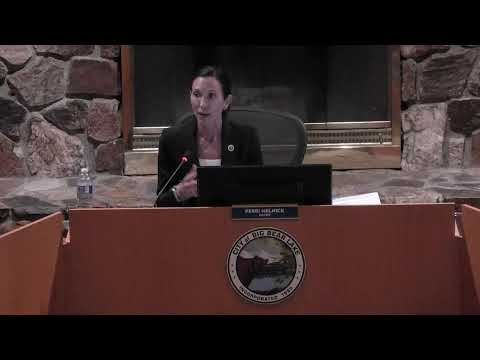
City staff and consultants presented an updated City of Big Bear Lake Emergency Operations Plan (EOP) to the council on Sept. 10 and the council provided detailed feedback, but did not adopt the plan at the meeting.
Nick Hacker (Emergency Manager) and consultant Tony Kletta of Jacob Green and Associates explained the EOP update process and cited requirements from federal and state guidance, including FEMA, the California Office of Emergency Services (Cal OES), the Standardized Emergency Management System (SEMS) and the National Incident Management System (NIMS). Staff noted the current EOP had not been updated since 2010 and that the update was intended to align local plans with county, state and federal procedures, clarify command structure, and support reimbursement eligibility for disaster costs.
Council members praised the comprehensiveness of the draft but asked staff to produce a condensed one‑page mission statement or "cliff notes" to make the plan usable for staff and the public. Several council members also requested clearer, written definitions of the "policy group" and the "disaster council," and asked that the plan more explicitly describe the mayor’s role in public communications during emergencies. Council member Kendi Hicks and others expressed concern about listing the city attorney in the line of succession and suggested removing that position from the succession list; other council members asked staff to clarify the line‑of‑succession language and the role of elected officials during an incident.
Several council members asked for hard‑copy versions to be available for key staff and elected officials in case communications systems fail during an event. Staff agreed to post a condensed summary on the city website and distribute printed copies. Council member Richard (Rick) Herrick asked that the city maintain a local EOC (Emergency Operations Center) presence during emergencies to preserve local "mountain common sense" in coordination with county and state partners and to ensure the city’s perspective is represented when larger agencies make decisions such as road closures.
Public commenters asked general questions about communications and past emergency responses. Nick Hacker and Tony Kletta emphasized the EOP is an "all‑hazards" plan designed to be supplemented by hazard‑specific annexes (for example, active‑shooter or wildfire annexes) and supported by training and exercises.
Rather than adopting the EOP that night, the council asked staff to revise the draft to include a short summary, clearer descriptions of elected‑official roles and the policy/disaster councils, clarify the succession language (remove or modify the city attorney position per council concerns), and to return with redlines and the condensed materials for final council action at a later meeting.