Get Full Government Meeting Transcripts, Videos, & Alerts Forever!
Get email alerts on the Land Use topic
No spam. Unsubscribe anytime.
Council introduces ordinance revising animal‑keeping rules in residential and commercial zones
Summary
The City Council introduced a development code amendment to clarify animal‑keeping rules citywide, including standards for pot‑bellied pigs, poultry, goats and indoor animal boarding in commercial zones, and found the changes exempt from CEQA (section 15061(b)(3)).
The Big Bear Lake City Council on Sept. 10 held a public hearing and voted to introduce and waive further reading for a development code amendment that updates animal‑keeping standards in residential and commercial zones.
City planning staffer Andrew Mellon presented Development Code Amendment 2025‑028, which proposes three code changes: (1) revise the residential permitted‑uses table (17.250.040A) to specify standards for domesticated animals including pot‑bellied pigs, pygmy goats, chickens, rabbits, chinchillas, horses and kennels while prohibiting animal breeding; (2) clarify setback requirements for animal enclosures in section 17.250.060; and (3) amend commercial zone rules (17.350.030) to allow indoor animal boarding as a principal use, expand medical boarding, and prohibit animal breeding in commercial zones.
Mellon said staff reviewed nearby jurisdictions and aligned many standards with San Bernardino County rules. Mellon also told the council the Planning Commission reviewed the amendment in workshops and recommended approval by a 5‑0 vote. Mellon noted the staff’s CEQA finding that the amendment is exempt under the “common sense” exemption, CEQA Guidelines section 15061(b)(3), because the proposal is a regulation change only and would not directly result in physical development.
Public comments included residents supporting backyard chickens and a speaker asking the council to exempt roosters; another speaker raised general opposition to enforcement approaches and property‑rights concerns. Council members questioned specifics such as the pot‑bellied pig allowances (the ordinance would limit animals by lot size; for example, a maximum of four pigs on larger lots under the county‑based size chart) and enforcement approaches (staff said enforcement is complaint driven, not proactive).
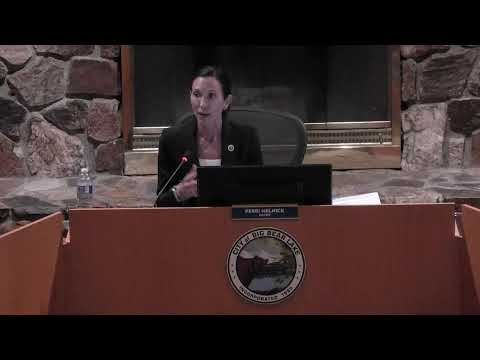
After public testimony, Council member Kendi Hicks moved and Council member Chuck Putz seconded introduction of the ordinance. The council then voted by roll call to introduce the ordinance and to find the CEQA exemption: Mayor Pro Tem Segovia — Aye; Council member Herrick — Aye; Council member Hicks — Aye; Council member Putz — Aye; Mayor Perry Melnick — Aye.
Council members and staff agreed to monitor neighborhood complaints and to use complaint‑driven enforcement. Mellon said the ordinance is scheduled for second reading and adoption on Oct. 2, 2025, and, if adopted, would become effective Nov. 3, 2025.