Get Full Government Meeting Transcripts, Videos, & Alerts Forever!
Get email alerts on the Historic Preservation Roofing topic
No spam. Unsubscribe anytime.
Bangor panel approves slate‑like asphalt roof for 42 West Broadway, citing lack of local slate craftsmen
Summary
The Historic Preservation Commission for the City of Bangor granted a certificate of appropriateness by unanimous vote to replace a failing slate roof at 42 West Broadway with a slate‑like asphalt product after finding undue hardship and limited local slate repair capacity.
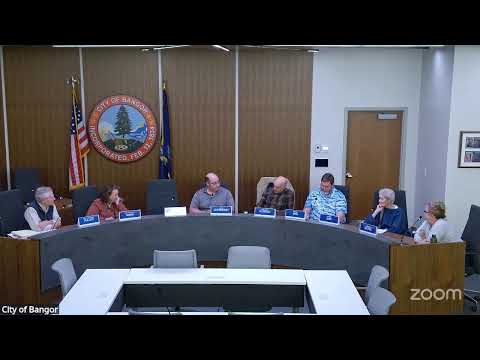
The Historic Preservation Commission for the City of Bangor voted 5-0 on Sept. 11 to grant a certificate of appropriateness allowing owner Stephen Thomason to remove a deteriorating slate roof at 42 West Broadway and replace it with a slate‑like asphalt shingle.
Commissioners decided the homeowner had made a reasonable effort to find local slate repair craftsmen and that requiring full slate repair or replacement would cause undue hardship. Chair Edmond Cherneski read the rules governing certificates of appropriateness and the clerk recorded the roll calls during the meeting.
Thomason told the commission the house’s slate roof — identified in the staff materials as the Harry L. Parker House, built about 1910 and located in the Whitney Park Historic District (Map Lot 022‑053) — is “a little over 115 years old” and that prior estimates of routine maintenance had been too low. “Whenever we bought the property, we were told that it just required minor maintenance, maybe $3,500 every few years. It's actually been about $13,000 over the just 3 years,” Thomason said. He said full slate replacement quotes he was shown were prohibitively expensive and that the competitive, locally available option was a slate‑like asphalt product; the applicant submitted a contractor estimate of about $80,000.
Mike Pullen, the city’s historic preservation consultant, summarized the house history and the material differences between original slate and the proposed product. “The existing slate roof has lasted a hundred and 15 years,” Pullen said, and he noted the proposed asphalt shingles differ from the original in color, texture and exposure and that the adjacent garage roof includes original slate.
Commission discussion focused on two competing aims in the city code: preserving character‑defining features and avoiding undue hardship when preservation is not reasonably practicable. Commissioners asked about alternative products, contractor experience with slate repair and the availability of slate roofers in the region. Contractors representing the installer explained the selected CertainTeed/architectural product and said it was the option their company could install with warranty support; they acknowledged they did not specialize in slate repair.
Multiple members of the public spoke during the hearing. Resident Justin Cartier urged the commission to allow modern slate‑like products, citing the city comprehensive plan’s encouragement of adaptation to new technologies. Other public speakers described attempts to contact local slate specialists and said several firms either were retired, had long wait lists, or did not return calls.
Commissioners voted through procedural motions before addressing standards in section 148 of the city ordinances (historic preservation). They unanimously deemed the application complete and confirmed applicable fees were paid. The panel considered individual preservation criteria in 148‑9 and recorded votes on several subcriteria; some of those individual motions failed to achieve the four affirmative votes required for issuance under the code. After debating the record evidence — including contractor letters, estimates, the consultant memo and the applicant’s outreach to slate contractors — the commission found that exceptional circumstances and undue hardship were present because slate repair or replacement was not reasonably feasible in a timely or economically practicable way for this owner. Based on those findings the commission voted 5-0 to issue the certificate of appropriateness for the proposed slate‑like asphalt roofing at 42 West Broadway.
The commission also noted it will schedule a special meeting to review applicable code language and procedures for handling cases involving historic roofing materials; the panel set a follow‑up meeting for Oct. 1, 2025, at 6 p.m.
Votes at a glance - Application deemed complete (motion): 5 yes, 0 no (roll call). - Applicant paid applicable fees (motion): 5 yes, 0 no (roll call). - Certificate of appropriateness (final summary decision to grant, based on undue hardship/exceptional circumstances): 5 yes, 0 no (roll call).
Context and next steps The commission’s action allows Thomason and his contractor to proceed with the approved slate‑like asphalt product. Commissioners signaled the issue is likely to recur as older slate roofs across the city reach the end of their service lives, and they scheduled a code‑review meeting to consider whether the preservation chapter’s language and guidance on ‘‘reasonably similar’’ materials or hardship standards should be updated.