Get Full Government Meeting Transcripts, Videos, & Alerts Forever!
Get email alerts on the Opioid Settlement Funding topic
No spam. Unsubscribe anytime.
Bangor applicants press subcommittee for opioid-settlement dollars to sustain recovery, treatment and basic needs
Summary
Community groups and service providers urged the three-member OBOA settlement funds subcommittee to fund peer recovery services, treatment, shelter operations, prevention programs and basic needs supports. Several applicants said current budgets are depleted and services face imminent cuts.
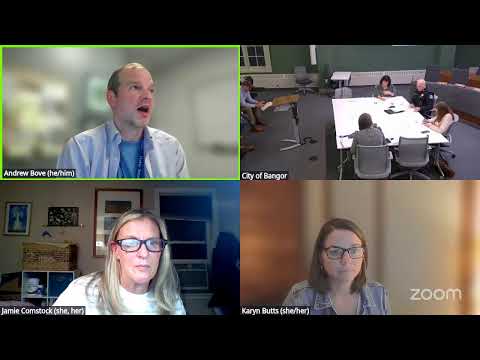
Members of the Bangor City OBOA settlement funds subcommittee heard nearly three hours of public input July 1 from recovery organizations, shelters, prevention advocates and volunteers seeking allocations from opioid-settlement money.
Speakers described urgent operating shortfalls, program cuts and requests for multi-year support to sustain peer-run recovery services, outpatient treatment, a low‑barrier emergency shelter, prevention programming tied to the new YMCA facility and basic needs operations such as food and furniture distribution.
The most urgent plea came from Together Place, a peer-run recovery center. Joseph Hartel, executive director of Together Place, said the center’s operating funds “will only carry us a few more months” and asked the committee to allocate settlement dollars to keep its doors open. Hartel said Together Place has cut its budget from about $400,000 to $250,000, reduced staff and is seeking funds to maintain existing services and expand outreach and volunteer coordination. He told the committee the center serves “between 300 to 500 unduplicated individuals each month,” which he estimated at approximately 4,800 people annually.
Several other organizations described service gaps that would be addressed by settlement funding. JC Fournier and Matthew Houghton, representing the Bangor YMCA’s effort to build a downtown facility, said the new Y is designed to provide primary prevention services including childcare, behavioral health counseling and expanded teen programming; Marge Moss Fraser, a YMCA consultant, said the group is open to multiyear funding and partnership approaches.
Wellspring, a long‑standing treatment provider in Bangor, told the committee it is experiencing its third year of financial losses. A Wellspring representative said outpatient services and a detox program face staffing and reimbursement challenges tied to MaineCare rates and rising wage costs for medical staff such as nurses. The representative asked for general operating support to stabilize clinical services and avoid further reductions.
Preble Street, which assumed operations of the Hope House shelter in February, asked for multi‑year funding to cover an estimated $500,000 to $700,000 operational shortfall over several years. Andrew Bove, vice president of social work at Preble Street, said about 43% of last month’s shelter guests met criteria for opioid use disorder and argued low‑barrier shelter operations are an appropriate use of settlement funds.
Smaller community providers also made specific requests. Christopher Olsen, who runs Welcome to Housing HomeGoods Bank, said the volunteer-run furniture program serves Bangor residents and nearby towns and needs funds to sustain an annual operating cost he estimated at about $25,000. A volunteer who runs an established food-distribution effort reported a current annual food cost of about $50,000 and said donations alone no longer cover demand.
Public commenters proposed program ideas for the committee to consider. Tyler Shanahan, a resident who previously spoke at council, proposed a recovery-housing scholarship program that would pay vetted recovery homes directly for up to two months of housing for people completing treatment and track outcomes such as employment. Community advocates led by Robin Carr and Latina Bryce proposed a kinship‑caregiver navigator to support informal caregivers of children affected by parental substance use and described a combined service hub and expanded syringe services program (SSP) to connect people in active use to harm‑reduction and treatment services.
Throughout the session committee members and presenters discussed program scope, measurement and eligibility. Several presenters acknowledged limits on data collection because of privacy rules and insurance constraints; Welcome to Housing’s organizer said the group could collect de‑identified counts (age ranges, household size, veteran status) but not clinical diagnoses without caseworker involvement. Speakers emphasized partnership possibilities across agencies including Penobscot County efforts and Penobscot County Cares.
The committee did not make funding decisions at the session. The chair said the subcommittee will meet the following week to refine recommendations and that the group hopes to align with a county committee working on parallel allocations. The meeting closed with the committee thanking presenters and noting the application process would move forward quickly.
Ending: The public input session produced multiple concrete funding requests and program proposals; the subcommittee signaled it will reconvene to weigh those requests, seek partnerships and develop application recommendations for city council review.