Get Full Government Meeting Transcripts, Videos, & Alerts Forever!
Get email alerts on the Zoning Building Permits topic
No spam. Unsubscribe anytime.
Linn County BZA denies appeal, upholds three Sunshine Meadows building permits
Summary
The Linn County Board of Zoning Appeals voted to deny an appeal of three building permits for the Sunshine Meadows minor plat, leaving permits issued April 17, 2025, in place. Petitioners argued permits violated a 10-acre minimum and subdivision rules; county staff and permit applicants said procedures were followed.
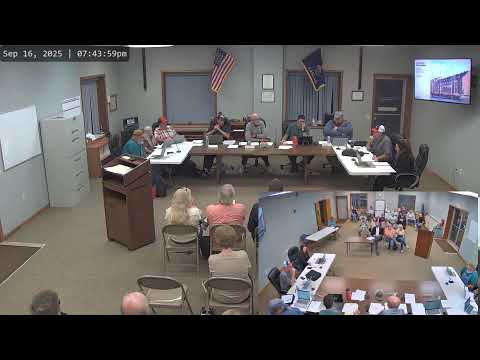
The Linn County Board of Zoning Appeals on July 8, 2025, voted to deny an appeal of three building permits for a small subdivision called Sunshine Meadows, leaving permits issued April 17, 2025, in place.
Petitioners represented by Jan Longnecker argued the permits for B25-033, B25-034 and B25-035 were issued in violation of county zoning and subdivision regulations, including a 10-acre minimum lot size for dwellings in agricultural zoning and restrictions on using the county's minor-plat procedure to avoid those minimums. The petitioners also said delays in responses to Kansas Open Records Act (KORA) requests affected the deadline for appealing the permits.
The appeal filing, introduced at the hearing, cites KSA 12-759(d), Linn County Resolution No. 95-23 (article 16, section 19-201 of the county zoning regulations) and section 2-101 of the Linn County subdivision regulations as procedural bases for review. The filing states the contested permits were approved by the zoning administrator on April 17, 2025, and argues the lots are smaller than the zoning code's required 10 acres and therefore should not have been permitted. The petitioners said a KORA request made March 31, 2025, was not fulfilled until July 8, 2025, and that delay affected the timing of their appeal.
Ben Souza, described in the hearing as the zoning administrator and director of planning and zoning, told the board the applicant for the permits was M and M Ventures, LLC, and read relevant sections of county zoning and subdivision regulations and the appeal procedures. Souza said the county's records show building permit applications were date-stamped April 8, 2025, and approved April 17, 2025, and recited the applicable appeal provisions for building permits and subdivision matters.
Neighbors and nearby residents testified in public comment, raising concerns about fragmentation of agricultural land, compatibility with farming operations, and road safety. Nathan Howard, who said he lives directly across the property and keeps cattle, argued the issuance of permits "violates the zoning regulations" and warned that creating smaller lots would "invite further fragmentation" of agricultural lands. Jan Longnecker, one of the petitioners, said the group did not oppose growth but urged adherence to planning and zoning processes and maps that identify appropriate areas for development. Tenant and nearby resident Caitlin Howard said the site is "a really nice area. It's not meant for subdivisions." Melissa Hertz, who rents pasture nearby and is a retired local educator, raised concerns about additional curb cuts and safety on local roads.
Representatives for the permit applicants, including a supporter who identified himself as a landowner across the street, told the board they had reviewed county codes and found no procedural errors in the permit process, and asked the board to judge the merits rather than deny the permits solely because petitioners missed internal deadlines for notices and records.
County counsel explained the board's role: first to determine whether petitioners are an "aggrieved" party with standing under Kansas law, and if so, to decide whether the building permits were properly issued in conformity with county regulations. Counsel cited case law on standing and said the burden to establish standing is on the party asserting it.
After limited discussion, a motion that "the permit stand as is" was made and seconded. The board recorded six ayes and no nays; the motion passed and the appeal was denied, leaving the three permits in effect.
Legal counsel advised that the standing question is one that can be reviewed by a court and referenced the state standard for an "aggrieved" party and relevant judicial precedent for appeals of administrative decisions.
The decision leaves the permits issued April 17, 2025, intact. Petitioners and neighbors who testified said they may pursue further review; county counsel noted judicial review is the next step for parties claiming they are aggrieved under state law.