Get Full Government Meeting Transcripts, Videos, & Alerts Forever!
Get email alerts on the Board Governance topic
No spam. Unsubscribe anytime.
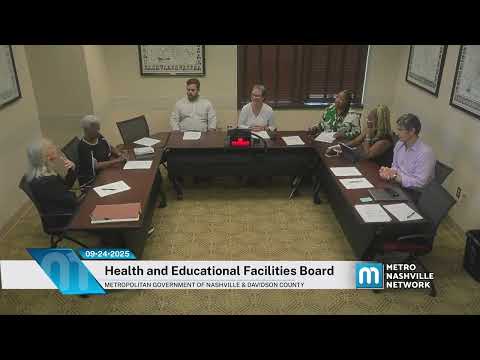
Board discusses onboarding, statutory limits and role in vetting financings
Summary
Members discussed planning a formal onboarding session, clarified the board's limited statutory authority over project operations, and considered developing a checklist to guide evaluations of financing requests.
Board members used the meeting's final segment to request a formal onboarding session, clarify the Health and Educational Facilities Board's statutory role, and discuss how members should evaluate applicants and ask questions.
A board staff member (name not given) explained the board is a nonprofit conduit issuer created under state statute and has limited authority: it issues tax‑exempt financing for qualifying health, educational and multifamily projects and does not set operational policies such as income restrictions. "The board under its state statute has very limited powers," the staff member said, noting that the board's role is fiduciary and focused on whether a project qualifies under the statute and federal tax rules.
Discussion covered examples when the board might defer approval, including when legal questions make a financing uncertain; the staff member cited a past instance involving litigation over separation of church and state where the board deferred while the law was unsettled. Board members pressed for clearer guidance about when a qualifying project should nonetheless be deferred or denied for community or operational concerns; staff and other members advised that, while the board cannot impose arbitrary conditions outside its statutory authority, questioning applicants and requesting follow‑up information is an appropriate way to influence proposals.
Members requested a dedicated onboarding or "lunch and learn" session, potentially recorded for future board members. Topics requested for the session included: the types of deals that come before the board, where the board sits in the overall financing and permitting sequence, examples of useful questions to ask applicants, and the board's legal limitations. The staff member said these subjects and sample checklists already factor into vetting applicants and suggested scheduling a 90‑minute session.
Several members emphasized the board's role as a public forum: even when the board lacks operational authority, public hearings give neighbors a place to raise concerns and allow the board to press applicants on relocation plans and community impacts. Members suggested adding community‑engagement expectations—such as evidence of meetings with councilmembers or affected neighbors—to the board's candidate checklist as a deferral trigger, not as a formal policy.
No formal action was taken; the group agreed to set dates for the onboarding session and for staff to circulate suggested materials and a checklist.